
- How Upholstery Cleaning Pricing Works
- Typical Upholstery Cleaning Costs by Piece
- What Drives the Price Up (or Down)
- Questions to Ask Before You Book
- Bundling Upholstery Cleaning With Other Services
- How Often Should You Clean Upholstered Furniture?
- DIY vs. Professional Upholstery Cleaning
- Upholstery Cleaning Cost FAQs
- Getting a Quote That Reflects the Actual Job
Upholstery cleaning cost is one of those numbers that varies more than most homeowners expect. You might get a quote for a single sofa and wonder why it's twice what your neighbor paid last year, or why two companies are hundreds of dollars apart. The answer almost always comes down to how cleaners price per piece, what they find when they arrive, and which factors push a job from the low end to the high end of the range.
This article breaks down how upholstery cleaning is typically priced, what each piece of furniture tends to cost, and what you can do before you call to make sure the quote you get actually reflects the job you need done.
How Upholstery Cleaning Pricing Works
Most professional upholstery cleaners price by the piece rather than by the hour or by square footage. That means you'll typically receive a line-item quote: one price for a sofa, another for a loveseat, another for a set of dining chairs, and so on.
Per-piece pricing is straightforward in theory, but the actual number for each piece depends on several variables a technician assesses either over the phone or on-site. Size is the most obvious factor, but fabric type, soil level, and the cleaning method required all play a role. A microfiber sectional that seats six people takes significantly more time and product than a small accent chair.
Some companies also charge a minimum service fee, which means cleaning a single small chair could cost nearly as much as cleaning two or three pieces bundled together. If you have multiple items, ask about bundled pricing before you book.
Typical Upholstery Cleaning Costs by Piece
The ranges below reflect what homeowners in the northeastern United States generally pay in 2026 for professional steam or dry-extraction cleaning. These are market-typical ranges, not fixed prices — your actual quote will depend on your specific furniture and local market.
Sofa (standard two- or three-seat)
A standard sofa is usually the anchor piece of any upholstery cleaning job. Expect quotes in the $80–$175 range for a straightforward fabric sofa in average condition. Heavily soiled pieces, large sectionals, or delicate fabrics like velvet or silk will push that number higher.
Sectional sofa
Sectionals are priced by the number of seats or sections, which is why quotes vary so widely. A four-seat L-shaped sectional might run $150–$300 or more. Some cleaners quote sectionals as two separate pieces — the chaise and the sofa portion — so ask how they count it before comparing quotes.
Loveseat
A loveseat typically runs $60–$130. The logic is proportional to a sofa: smaller surface area, less product, less time.
Armchair or accent chair
Single chairs are usually priced at $40–$90 each. If you have a matching pair, many cleaners will discount the second chair slightly.
Dining chairs
Dining chairs are often priced per seat at $15–$35 each, though some cleaners set a minimum for the whole set. A set of six upholstered dining chairs might run $90–$175 total.
Ottoman
An ottoman typically runs $40–$80 depending on size and fabric. Tufted ottomans take longer because of the crevices, which tends to push the price toward the higher end.
Mattress
Some upholstery cleaners also handle mattresses. A queen generally runs $60–$120; a king runs slightly more.
What Drives the Price Up (or Down)
Knowing the per-piece baseline is useful, but the final quote depends on conditions specific to your furniture and your home.
Fabric Type
Synthetic fabrics like polyester and microfiber are generally the easiest and least expensive to clean. Natural fibers like cotton and linen require more care. Delicate materials — silk, velvet, wool — need specialized solvents and slower methods, which adds both time and cost. Most pieces also carry manufacturer codes (W, S, WS, or X) that restrict which cleaning methods can be used, and a reputable cleaner will check those before starting.
Soil Level and Staining
A piece that hasn't been cleaned in five years, or one with pet accidents, food stains, or embedded dirt, will cost more than something lightly soiled and cleaned annually. Some cleaners charge a flat surcharge for heavy soiling; others price it into the per-piece rate after inspection. Either way, expect the quote to reflect the actual condition of the furniture.
Pet Hair and Odor
Pet hair removal is labor-intensive, and pet odor often requires a separate enzyme treatment. If you have pets, ask upfront whether pet-related surcharges apply. An odor treatment for a sofa might add $30–$60 to the base price.
Cleaning Method
The two most common professional methods are hot water extraction (steam cleaning) and dry-extraction cleaning. Hot water extraction works well on most fabrics but requires drying time. Dry-extraction uses minimal moisture and dries faster, which some homeowners prefer. Certain fabrics can only be cleaned one way, and the method required can affect the price. Solvent-based cleaning for delicate materials is typically the most expensive option.
Accessibility and Location in the Home
Furniture on an upper floor, in a tight room, or in a space that's hard to maneuver equipment through takes longer to service. Some cleaners factor this into the quote upfront; others don't mention it until they arrive. It's worth asking when you call.
Questions to Ask Before You Book
Getting an accurate upholstery cleaning estimate requires a bit of preparation on your end. Here's what to have ready before you call or submit a quote request.
List every piece you want cleaned. Don't just say "the living room furniture." Name each item: sofa, loveseat, two armchairs, ottoman. This lets the cleaner give you a per-piece breakdown rather than a vague estimate.
Know your fabric types. Check the manufacturer tag on each piece. If the tag is gone, look up the furniture model online or describe the fabric as best you can. Saying "it feels like velvet but I'm not sure" is more useful than saying nothing.
Be honest about condition. If a cushion has had a stain for two years, mention it. If the dog sleeps on the sofa every night, say so. Surprises on the day of service can change the price, and it's better to know the full cost upfront.
Ask about minimum charges. If you only have one or two pieces, ask whether a minimum service fee applies. Sometimes it makes more sense to add a piece to the job than to pay a minimum for a single item.
Ask what's included. Does the quote cover pre-treatment for stains? Deodorizer? Fabric protector? Knowing what's included — and what costs extra — matters when you're comparing quotes from different companies.
Bundling Upholstery Cleaning With Other Services
One practical advantage of working with a company that handles multiple types of home cleaning is the ability to combine jobs in a single visit. If you're already scheduling upholstery cleaning, it often makes sense to address carpet cleaning at the same time — the equipment and crew are already there.
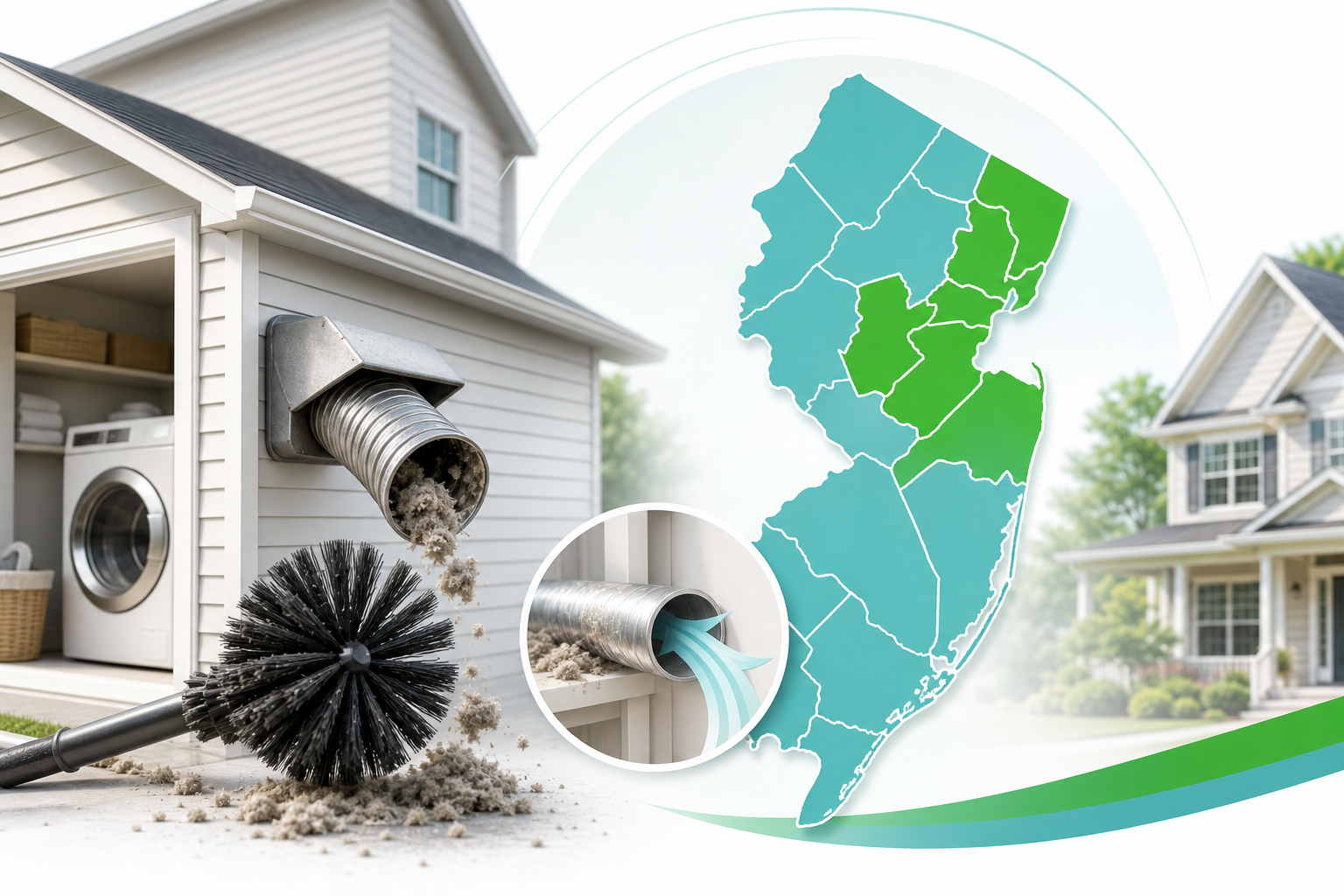
At Certified Home Solution, trained technicians handle both carpet and upholstery cleaning alongside air duct cleaning, dryer vent cleaning, chimney cleaning, and fireplace cleaning. The company has served eight New Jersey counties — Monmouth, Middlesex, Ocean, Bergen, Somerset, Union, Essex, and Morris — since 2017, and all six service categories can be booked under one appointment. That means you can get the upholstery done and take care of the dryer vent or chimney in the same visit, rather than coordinating multiple vendors on separate days.
Free quotes are available by phone at (732) 858-2441 or through the online contact form.
How Often Should You Clean Upholstered Furniture?
Most professionals recommend a cleaning every 12 to 24 months for furniture in regular use. Households with pets, young children, or allergy sufferers are usually better served by the 12-month end of that range. Furniture in a formal room that rarely gets used can go longer between visits.
Between professional cleanings, regular vacuuming with an upholstery attachment removes surface dust and debris before it works deeper into the fabric. Treating stains promptly — before they set — also reduces the amount of work a professional has to do and can keep your per-piece cost lower over time.
DIY vs. Professional Upholstery Cleaning
Rental steam cleaners are available at hardware and grocery stores, and some homeowners use them to manage light soiling between professional visits. They can handle surface dirt on durable fabrics, but they have real limitations.
Rental machines typically don't reach the water temperature or suction power of truck-mounted or professional-grade portable equipment. Over-wetting is a common mistake, and it can lead to mold growth inside cushions or shrinkage in natural-fiber fabrics. Delicate materials shouldn't be cleaned with a rental machine at all.
For furniture that's heavily soiled, stained, or made from anything other than a basic synthetic, professional cleaning produces better results and carries far less risk of damage. The cost of replacing a sofa ruined by improper cleaning is considerably more than a professional service call.
Upholstery Cleaning Cost FAQs
How much does it cost to have a sofa professionally cleaned?
A standard two- or three-seat fabric sofa typically costs $80–$175 to clean professionally. Sectionals, heavily soiled pieces, and delicate fabrics will cost more. Exact pricing depends on your specific furniture and the cleaner you hire.
Do upholstery cleaners charge per piece or by the hour?
Most price per piece rather than by the hour. You'll receive a line-item quote for each item. Some companies also apply a minimum service fee, which is worth asking about if you only have one or two pieces.
What makes upholstery cleaning more expensive?
The main cost drivers are fabric type (delicate fabrics cost more to clean safely), soil level (heavily soiled or pet-stained pieces take more time and product), the cleaning method required, and any add-ons like odor treatment or fabric protector.
Is it worth getting upholstery and carpet cleaned at the same time?
In most cases, yes. Combining services in one visit is more efficient and often more cost-effective than scheduling separate appointments. A company that handles both can get everything done in a single trip.
How do I know if my upholstery fabric can be steam cleaned?
Check the manufacturer tag on the furniture. A "W" code means water-based cleaning is safe. An "S" code means solvent-only. A "WS" code means either method works. An "X" code means vacuum only. A reputable cleaner will check these codes before starting.
How long does upholstery cleaning take to dry?
It depends on the cleaning method and fabric type. Hot water extraction typically takes two to six hours. Dry-extraction methods dry much faster — sometimes within an hour. Fans or open windows speed up drying regardless of method.
How often should I have my upholstery professionally cleaned?
Every 12 to 24 months is a reasonable guideline for furniture in regular use. Households with pets or allergy concerns are better served by annual cleaning. Light-use furniture in a formal room can go longer between visits.
Getting a Quote That Reflects the Actual Job
Upholstery cleaning cost makes more sense once you understand the per-piece model and the factors that move prices up or down. A quote that seems high isn't necessarily unreasonable if it accounts for a large sectional, a delicate fabric, or years of accumulated soil. A quote that seems low is worth questioning for the same reasons.
The best approach is to prepare your piece list, know your fabrics, be upfront about condition, and ask specific questions before you commit. If you're in New Jersey and want a quote that covers upholstery alongside other home services in a single visit, reach out to Certified Home Solution at (732) 858-2441 or through the contact form at certifiedhomessolution.com.