- Why Chimney Cleaning Actually Matters
- What You Can Check Yourself
- Symptom-Based Decision Guide
- How Usage and Fuel Type Change the Schedule
- What to Photograph Before You Call a Sweep
- The Pre-Season Homeowner Checklist
- When a Cleaning Becomes a Repair
- FAQs
- Get It Done Before the First Fire
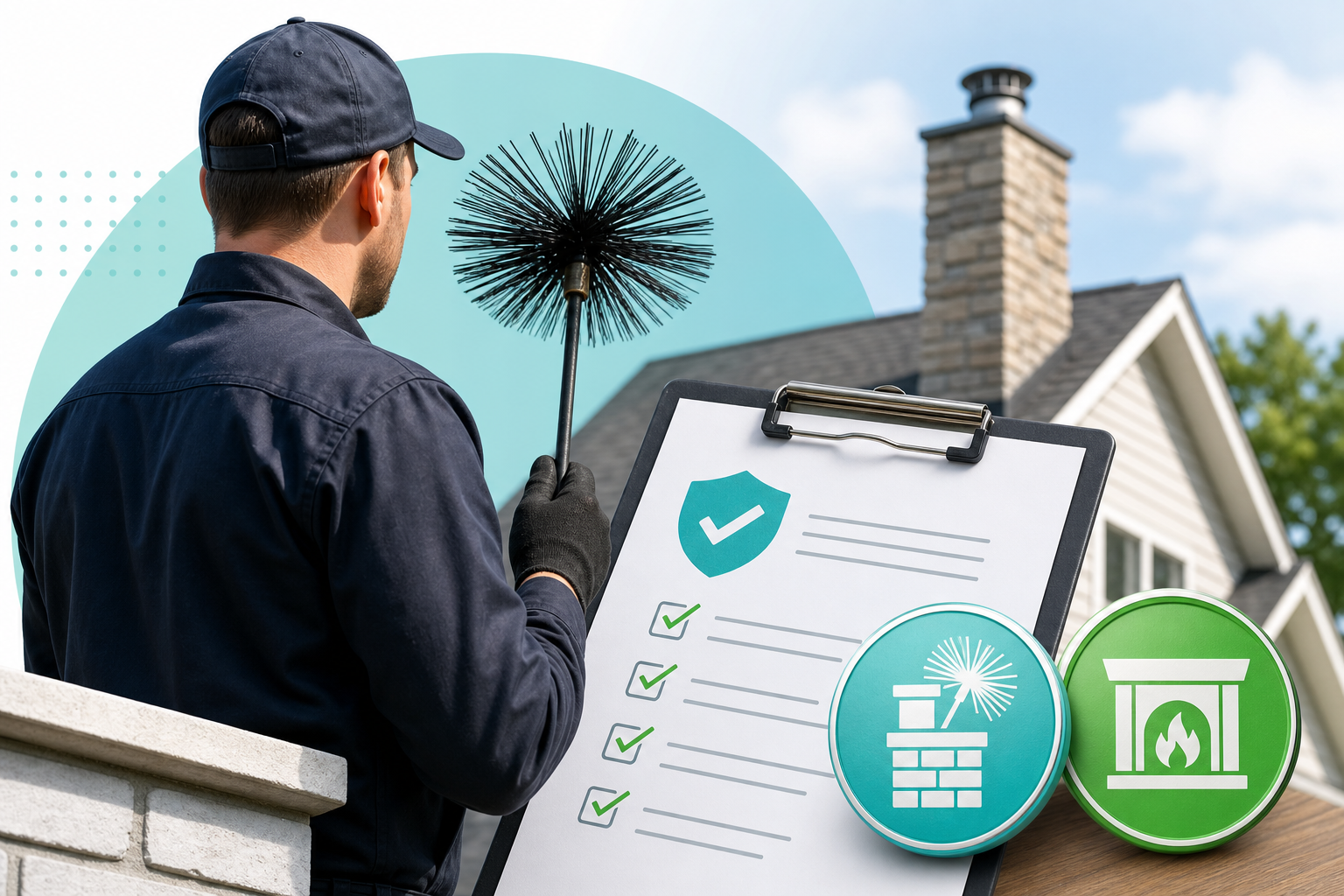
Your chimney will tell you when it needs attention — you just have to know what you're looking at. Understanding how to tell if a chimney needs cleaning can stop a slow-building hazard before it becomes an emergency, and it puts you in a much better position to make a confident call before heating season starts. This checklist walks through the warning signs, explains what they mean, and tells you when to stop waiting and call a professional.
Why Chimney Cleaning Actually Matters
The risk is real and specific. According to gitnux.org's 2026 data, creosote buildup is responsible for 80 percent of chimney fires. Creosote is the tarry residue that forms when wood smoke condenses on cooler flue walls. It builds up with every fire, and once it reaches a certain thickness, it becomes both flammable and impossible to remove without professional equipment.
There's a second factor worth knowing. Gitnux.org's 2026 figures also show that unlined or inadequately lined masonry chimneys account for 25 percent of chimney fires. Structural condition matters just as much as cleanliness — which is why a cleaning visit often functions as an inspection at the same time.
The cleaning threshold is well established. The Chimney Safety Institute of America, as documented at web.csia.org, states that a chimney should be swept when buildup reaches one-eighth of an inch or more. TODAY's 2023 report on chimney maintenance cited the same figure. That's roughly the thickness of a nickel. You can't see that from across the room, but you can spot the warning signs that get you there.
What You Can Check Yourself
A basic assessment doesn't require any special tools. Ecogrizzly.com notes that a homeowner can do a useful visual check from ground level and from inside the firebox. Here's how to work through it.
Step 1: Look at the Firebox
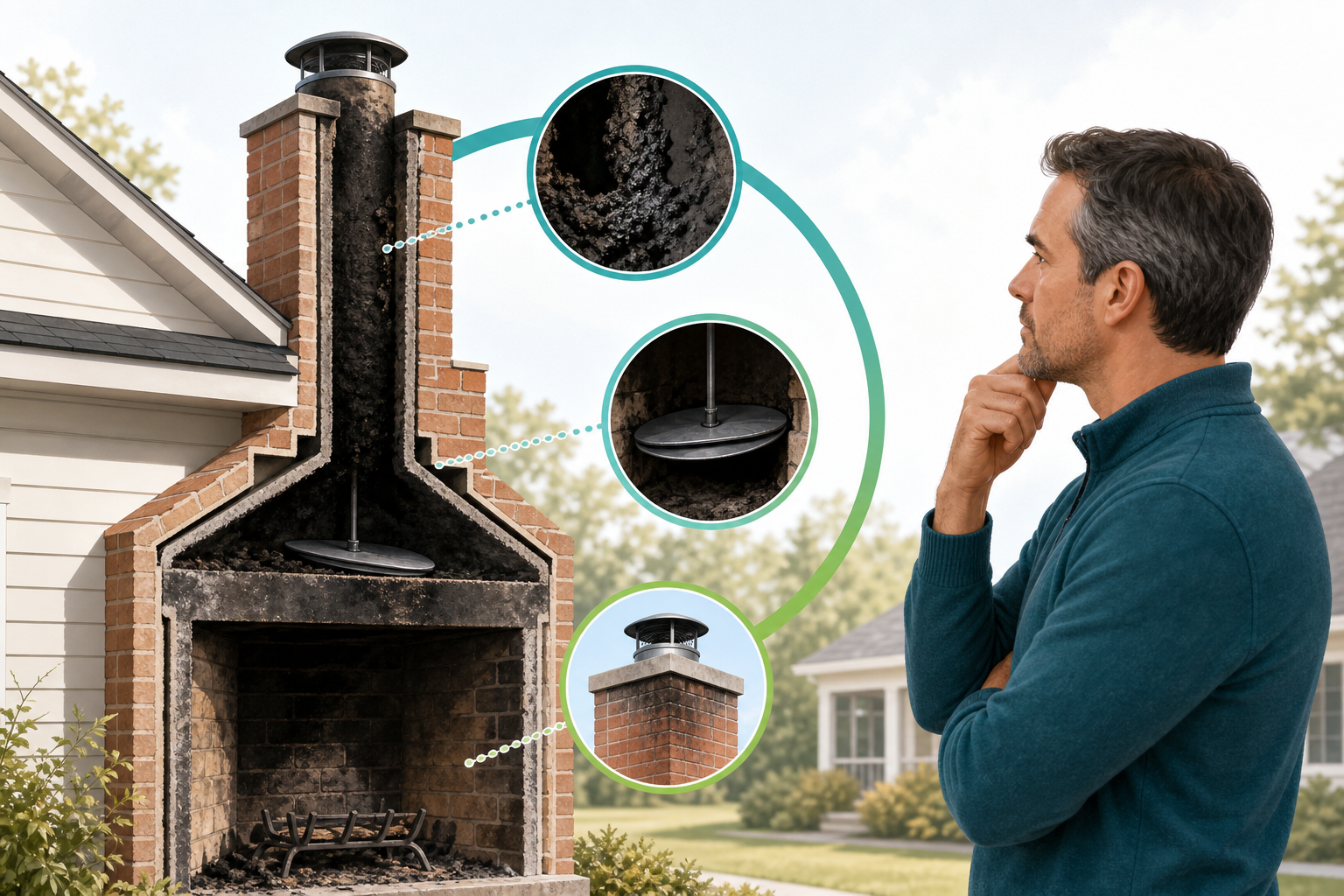
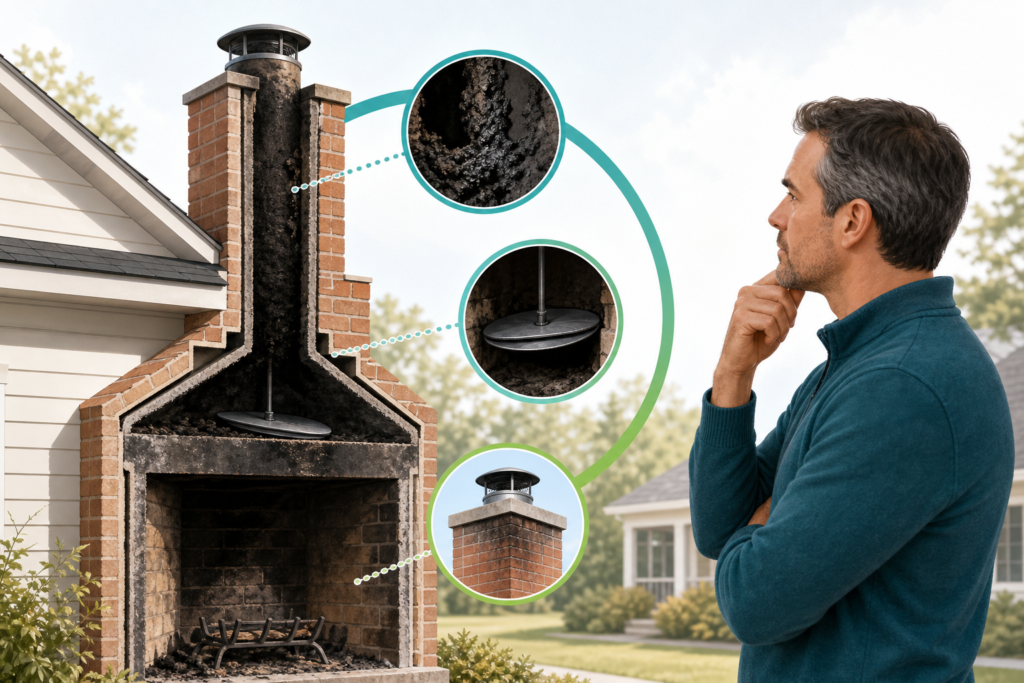
Open the damper fully and shine a flashlight up into the firebox. You're looking at the smoke shelf and the lower flue walls. What you find tells you a lot:
- Light gray or powdery soot is normal residue from recent fires. It's relatively easy to remove and doesn't signal immediate danger on its own.
- Black, shiny, or tar-like deposits are a different matter. Ecogrizzly.com describes these as Stage 2 or Stage 3 creosote, which requires professional removal — not a DIY brush job.
- Heavy black flaking or chunks falling into the firebox mean the buildup is thick enough to shed on its own. The flue is well overdue for service.
If you can't see more than a few inches up the flue because of darkness or obstruction, that's worth noting before you call a sweep.
Step 2: Check the Damper
Open and close the damper by hand. It should move freely and seat completely when closed. A damper that sticks, rattles, or won't seal properly lets outside air, moisture, and animals into the flue year-round. Rust or visible corrosion on the damper plate means moisture has been getting in — and that accelerates creosote buildup while causing structural damage over time.
Step 3: Look at the Smoke Chamber and Smoke Shelf
The smoke shelf sits just above the firebox opening, behind the damper. Debris collects there: leaves, bird nests, dried soot, sometimes small animals. Shine your flashlight at an angle and look for anything that doesn't belong. Nesting material is a fire hazard and blocks proper draft.
Step 4: Inspect the Exterior from Ground Level
Walk around the outside of your home and look at the chimney from the yard. You're checking for:
- A missing or cracked chimney cap at the top of the flue. A cap keeps rain, animals, and debris out. No cap means the flue has been exposed to the elements.
- Efflorescence — white staining on the brick — which indicates water is moving through the masonry.
- Spalling bricks or crumbling mortar joints along the chimney stack. These are structural concerns that go beyond cleaning, but they tend to show up alongside neglected maintenance.
- Staining on the exterior siding near the chimney, which can mean smoke or moisture is escaping through cracks rather than exiting through the flue.
Symptom-Based Decision Guide
Not every sign carries the same urgency. Use this framework to decide how quickly to act.
Urgent Signs: Call a Sweep Before the Next Fire
- Thick black, shiny, or tar-like deposits visible in the firebox
- Smoke backing into the room during a fire
- A strong, persistent smoky or oily odor when the fireplace isn't in use
- Visible animal nesting material in the flue or on the smoke shelf
- Chunks of creosote or debris falling into the firebox
These aren't "schedule it when convenient" situations. A fire in a creosote-coated flue can spread to surrounding framing within minutes.
Routine Signs: Schedule Before the Heating Season
- Light gray or powdery soot buildup after regular use last season
- The fireplace was used frequently — more than two or three times per week through winter
- It's been more than a year since the last cleaning or inspection
- You burn unseasoned or green wood, which produces far more creosote than dry, seasoned wood
- The damper shows light rust or stiffness but still operates
Signs That May Indicate Repair, Not Just Cleaning
- Cracked or missing chimney cap
- Spalling bricks or deteriorating mortar
- A damper that no longer seals
- Water stains inside the firebox or on the hearth
These point to structural issues that a standard sweep won't fix. A professional can assess whether the cap, crown, dampers, or brickwork need repair alongside the cleaning.
How Usage and Fuel Type Change the Schedule
How often you use the fireplace matters more than the calendar. A household burning wood three nights a week from October through March will accumulate far more creosote than one that lights a fire on Christmas Eve and calls it a season.
Wood-burning fireplaces produce the most creosote and need the most attention. Annual cleaning is the baseline, but heavy users should consider having the flue checked mid-season.
Gas fireplaces produce less visible debris, but they still need annual inspection. Spiders and insects are drawn to the smell of gas and can clog burner ports or vent lines. The flue can also develop moisture problems and structural deterioration regardless of how little the fireplace gets used.
Infrequently used chimneys aren't automatically safe. Atchimneysweeps.com's 2026 guidance notes that annual inspections are recommended even for chimneys that haven't been used, because hazards including moisture damage, animal intrusion, and structural deterioration can develop without a single fire being lit.
NFPA 211, as cited by viochimney.com in 2026, calls for a chimney inspection every year regardless of use frequency.
What to Photograph Before You Call a Sweep
Having a few photos ready when you call helps the technician understand what they're walking into — and can speed up the appointment.
- The firebox interior, especially any visible deposits or debris
- The damper from below, showing its condition and whether it opens fully
- The chimney cap from the yard (or its absence)
- Any exterior staining, cracked bricks, or mortar damage
- The area around the hearth if you've noticed smoke staining or odor
You don't need to get on the roof. Ground-level and firebox-level photos give a professional enough context to arrive prepared.
The Pre-Season Homeowner Checklist
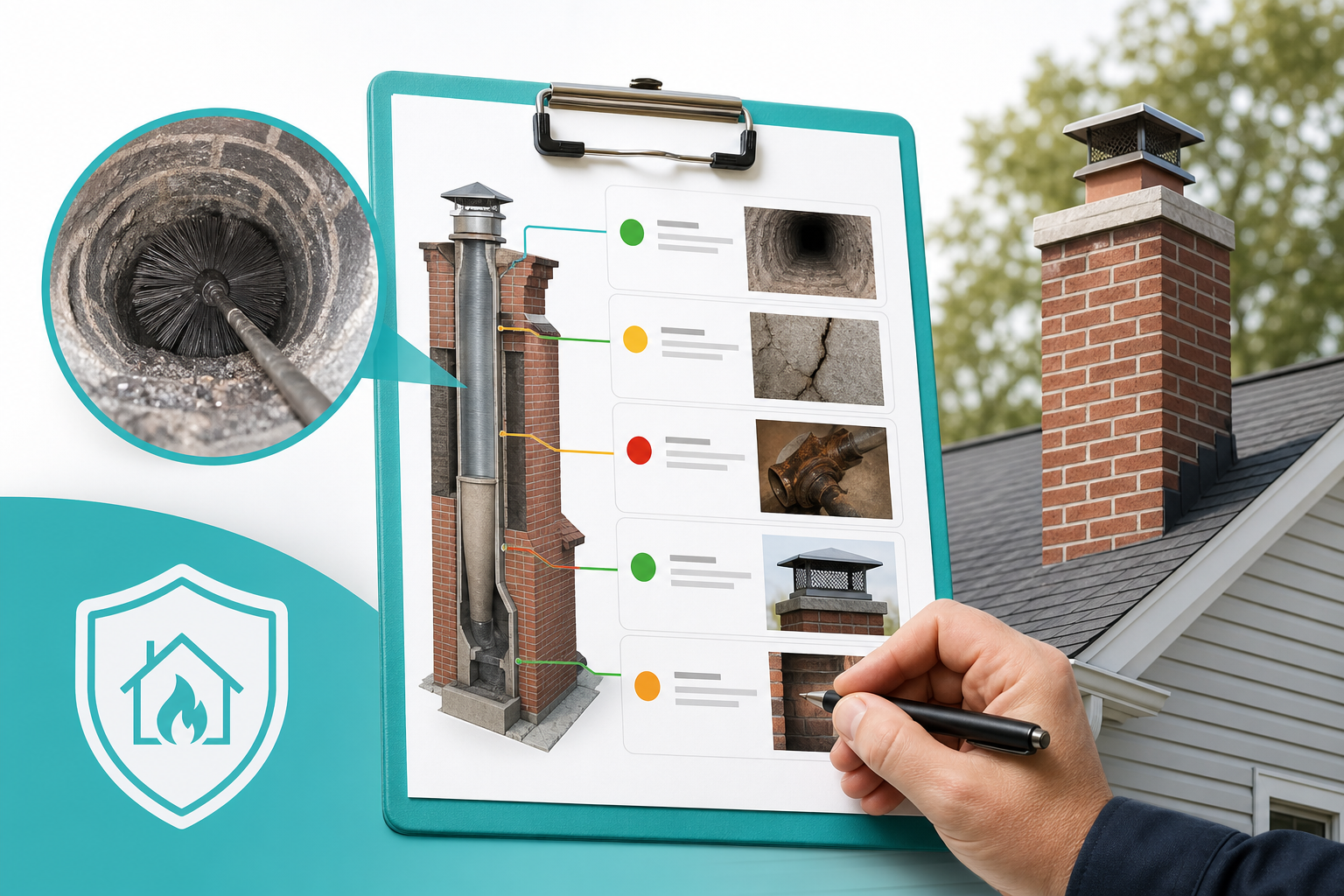
Run through this each fall before the first fire of the season. Note anything that looks off.
Firebox interior
- Soot color is light gray, not black or shiny
- No tar-like deposits visible on firebox walls or smoke shelf
- No debris, nesting material, or animal droppings present
- No chunks of material falling from the flue
Damper
- Opens and closes smoothly
- Seats fully when closed (no daylight visible when standing at the hearth and looking up)
- No heavy rust or visible corrosion
Exterior chimney
- Chimney cap is in place and intact
- No spalling bricks or crumbling mortar joints
- No white staining (efflorescence) on the brick
- No staining on siding near the chimney
Usage history
- Last professional cleaning was within the past 12 months
- Fuel used was dry, seasoned wood — not green or wet wood
- Fireplace was not used more than two to three times per week last season
If you check off more than two items in any category, schedule a professional cleaning before lighting the first fire.
When a Cleaning Becomes a Repair
Sometimes what looks like a maintenance issue is actually structural damage. Cracked bricks, a missing chimney crown, a corroded damper, or visible gaps in the mortar all need repair work — alongside or instead of a standard sweep.
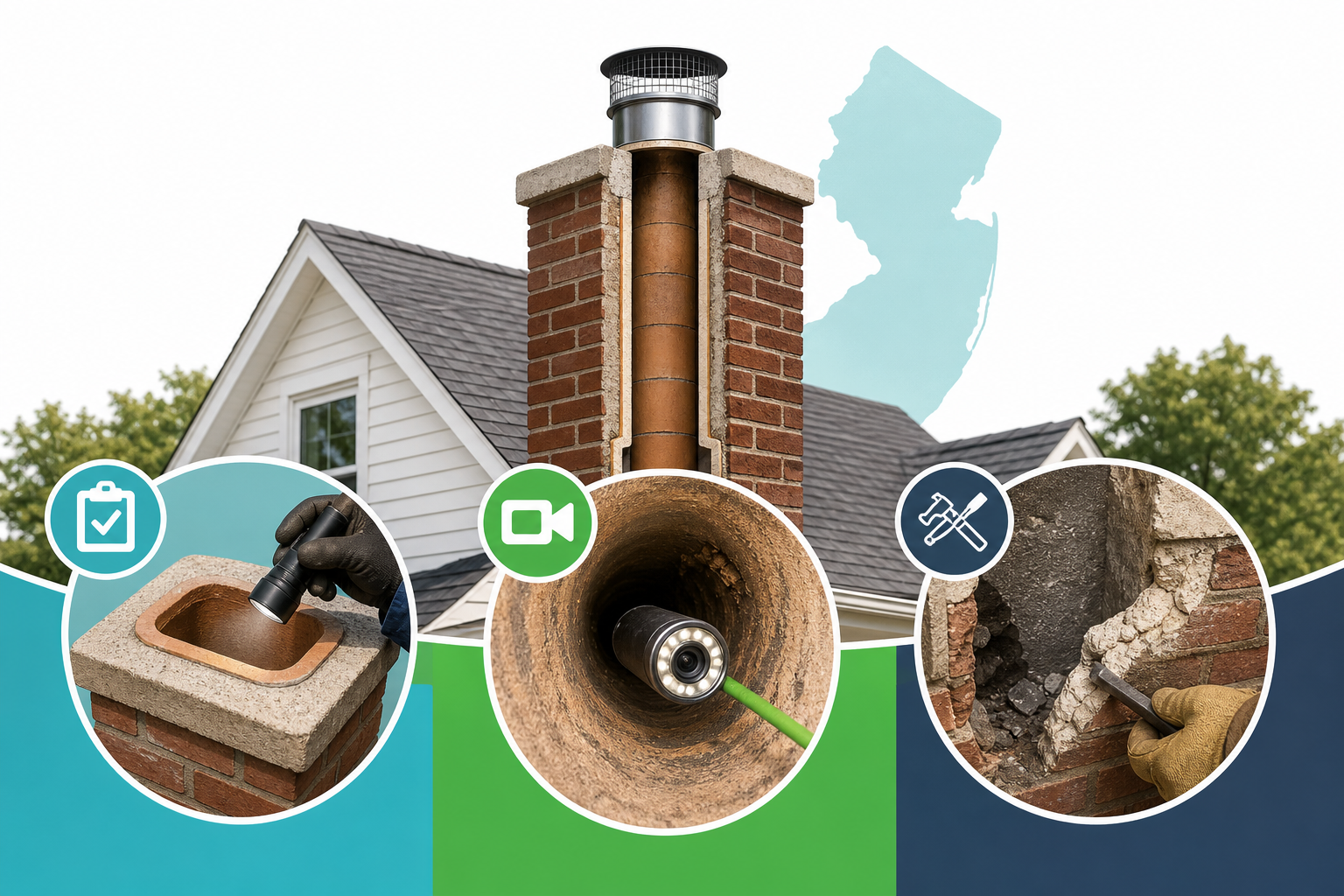
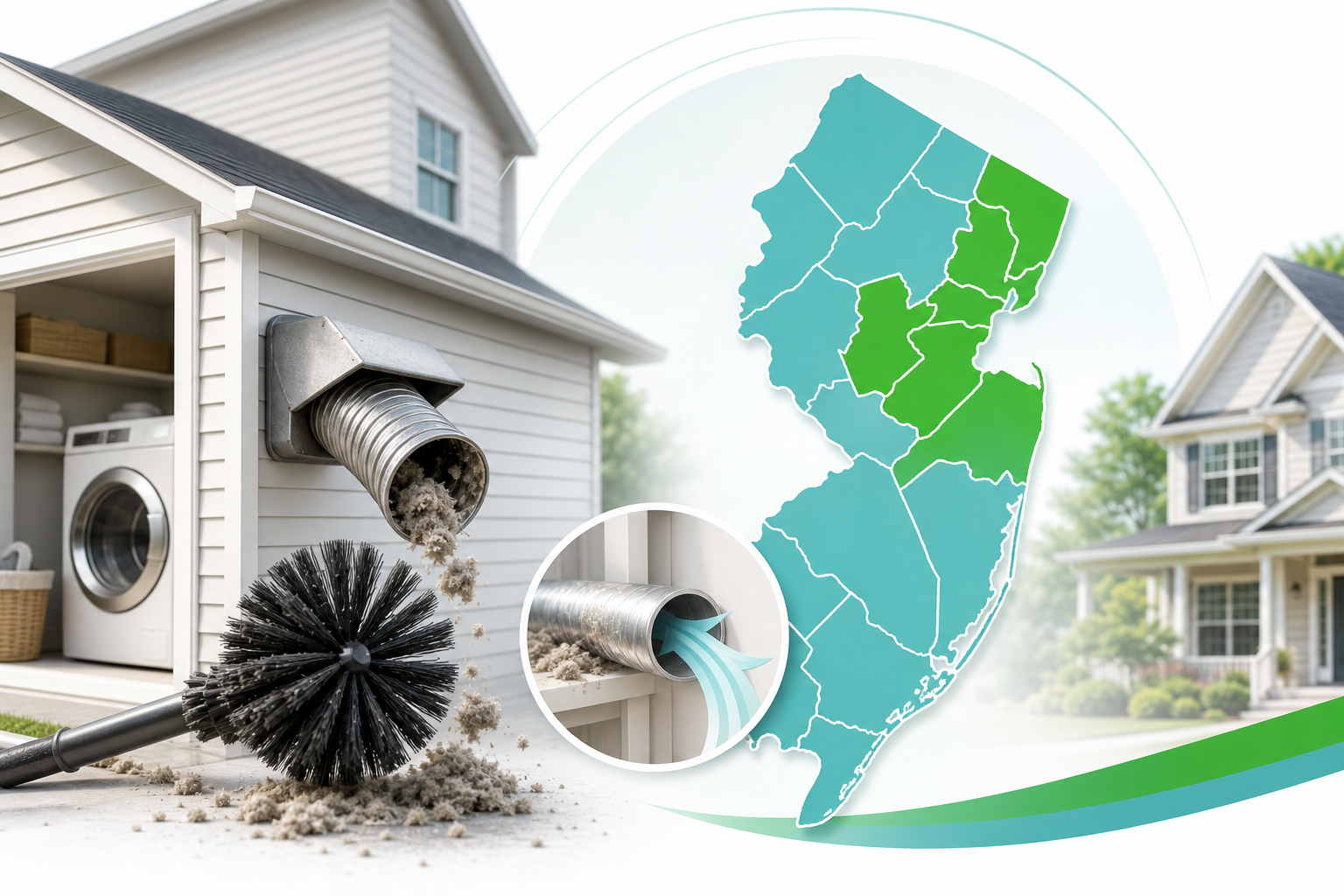
Certified Home Solution has handled chimney cleaning and chimney repair across New Jersey since 2017, covering caps, bricks, crowns, dampers, and electric fireplace components in addition to standard sweeps. The team serves homeowners in Monmouth, Middlesex, Ocean, Bergen, Somerset, Union, Essex, and Morris counties. Chimney cleaning typically runs $150 to $300, with exact quotes available by phone at (732) 858-2441 or through the online form at Certified Home Solution.
FAQs
How do I know if my chimney needs cleaning or just an inspection?
An inspection tells you the condition of the flue, firebox, and structure. A cleaning removes the buildup. In practice, most professional sweeps perform a basic inspection as part of the cleaning visit. If you're seeing visible deposits, smoke backing into the room, or a persistent odor, you need both. If it was a light-use season and everything looked fine, an inspection alone may be enough.
What does creosote look like, and how is it different from regular soot?
Regular soot is light gray or black and powdery. Creosote is darker — often shiny or tar-like — and can range from a flaky crust to a thick, hard glaze. The shiny or tar-like appearance is the key visual signal. Ecogrizzly.com describes black, shiny, or tar-like deposits as Stage 2 or Stage 3 creosote, which requires professional removal rather than a standard brush.
How often should a chimney be cleaned if I use the fireplace regularly?
Annual cleaning is the standard recommendation for regular wood-burning use. If you're burning wood more than two or three times per week through a full heating season, a mid-season check makes sense. The threshold from web.csia.org is one-eighth of an inch of buildup, which can accumulate faster than most homeowners expect with heavy use.
Do gas fireplaces need chimney cleaning?
Yes. Gas fireplaces produce less creosote, but the flue and venting system can still accumulate debris, moisture damage, and blockages from insects or animals. Annual inspection is recommended regardless of fuel type.
Can I clean my chimney myself?
Visual checks from the firebox level and from the yard are something any homeowner can do safely. Actual cleaning — especially if Stage 2 or Stage 3 creosote is present — requires professional equipment and shouldn't be attempted without training. DIY chimney brushes can handle light powdery soot in some situations, but they won't touch glazed creosote or structural issues.
What happens if I skip chimney cleaning for a few years?
Creosote accumulates with each fire. Once it reaches a significant thickness, it becomes flammable and can ignite inside the flue, sending flames into the surrounding structure. Moisture damage also progresses unchecked without regular inspection, which can lead to costly structural repairs that far exceed the cost of routine cleaning.
What should I tell the chimney sweep when I call?
Mention the type of fireplace (wood-burning or gas), how frequently you used it last season, when it was last professionally cleaned, and any specific symptoms — smoke backing into the room, odor, visible debris. Photos of the firebox and exterior chimney are helpful if you have them.
Get It Done Before the First Fire
The best time to find out your chimney needs cleaning is before you light a fire — not after smoke fills the room. Run through the checklist above each fall, note anything that looks off, and call a professional if you see shiny or tar-like deposits, blocked draft, or structural damage.
A chimney that's been properly cleaned and inspected gives you confidence every time you use the fireplace. One that's been ignored for a few seasons is a different situation entirely.