- The Short Answer
- Warning Signs Your Dryer Vent Needs Cleaning Now
- How Often Should You Clean Your Dryer Vent?
- What Professional Dryer Vent Cleaning Actually Involves
- Dryer Vent Cleaning for NJ Homeowners
- FAQs
- A Simple Rule
If your clothes are taking longer than usual to dry, or you're catching a burning smell from the laundry room, your dryer vent is probably overdue for a cleaning. For most households, once a year is the right interval. Homes with heavy laundry use, pets, or large families should bump that up to every five to six months.
The Short Answer
Your dryer vent needs professional cleaning when restricted airflow starts affecting drying performance, raising temperatures inside the drum, or pushing lint toward the exterior vent opening. A clogged vent isn't just an inconvenience — it's a fire hazard. The U.S. Fire Administration and the National Fire Protection Association estimate that dryers and washing machines contribute to roughly 2,900 to 15,970 residential fires each year in the U.S., with failure to clean the vent listed as one of the leading causes.
That's not a number to brush past.
Warning Signs Your Dryer Vent Needs Cleaning Now
Most of these don't require any special equipment to spot. Go through the list and see what applies.
Performance and heat signs:
- Clothes take 60 minutes or more to dry on a normal cycle. A full load should finish in 45 minutes or less under typical conditions. If you're running a second cycle regularly, restricted airflow is almost always the reason.
- Clothes feel unusually hot at the end of a cycle. When hot, moist air can't escape through the vent, it recirculates inside the drum. Fabrics come out hotter than they should, and the outside of the dryer may feel warm to the touch.
- The laundry room itself feels warmer or more humid than usual. Heat and moisture that can't exit through the vent have to go somewhere — and that somewhere is your laundry room.
Smell and sensor signs:
- A burning smell during or after a cycle. Lint is highly flammable. When it builds up inside the duct and near the heating element, even moderate heat can cause it to scorch. Don't ignore this one.
- A musty or stale odor on clothes after drying. A partially blocked vent traps moisture, which creates conditions for mildew to develop. If clean laundry smells like it sat in a damp towel, the vent is worth a look.
- Your dryer is throwing error codes related to airflow or overheating. Many modern dryers have sensors that detect restricted airflow and will shut off early or display a code. Check your manual — these codes often point directly to a vent obstruction.
Physical and visual signs:
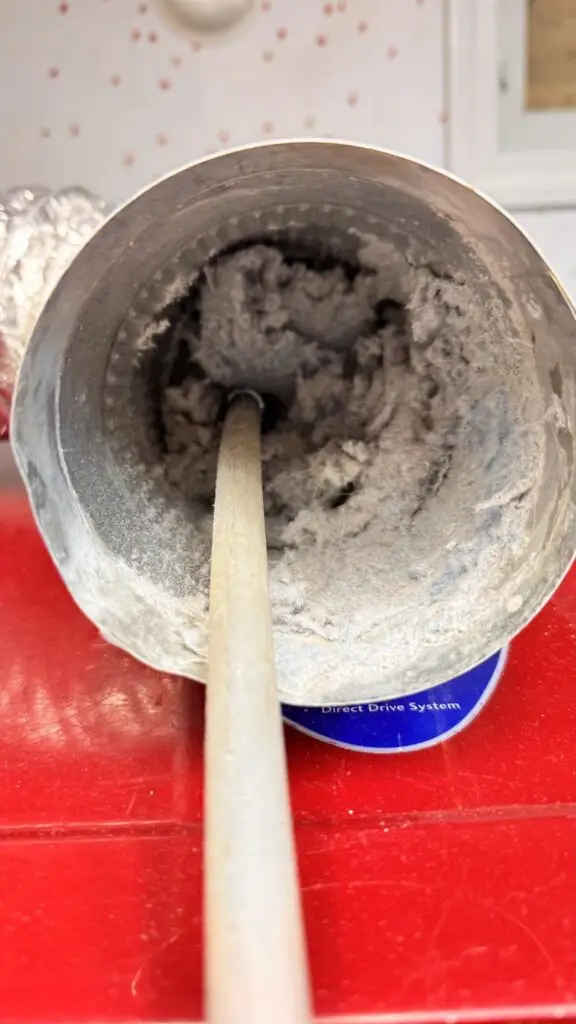
- Lint accumulating around the back of the dryer or on the floor nearby. A little lint escaping the trap is normal. Visible buildup outside the machine means airflow is pushing debris backward through the system.
- The exterior vent flap doesn't open when the dryer is running. Step outside during a cycle and check the vent hood on the exterior wall. The flap should swing open from the airflow. If it stays shut or barely moves, the duct is obstructed.
- Visible lint at the exterior vent hood. Lint clinging to the outside of the vent opening means debris has traveled the full length of the duct and is starting to back up.
- It's been more than 12 months since the last cleaning. Even without obvious symptoms, lint accumulates steadily. Annual cleaning is preventive maintenance — not just something you do after things go wrong.
How Often Should You Clean Your Dryer Vent?
It depends on how much laundry your household produces.
Once a year is the standard recommendation for a typical household of two to four people doing laundry a few times per week.
Every five to six months makes more sense if any of these apply:
- You have pets that shed heavily — pet hair accelerates lint buildup significantly
- Your household does laundry daily or close to it
- You regularly dry large, bulky items like comforters, towels, or pet bedding
- You have a long vent run (more than 25 feet from dryer to exterior) or a duct with multiple bends
- Your duct is made of flexible plastic or foil accordion material rather than rigid metal — these trap lint far more easily
For NJ homeowners specifically: many older homes in the state have longer or more complex duct routes, particularly in split-level and colonial-style construction common throughout the region. If you're not sure about your duct length or configuration, a technician can assess it during a cleaning visit.
What Professional Dryer Vent Cleaning Actually Involves
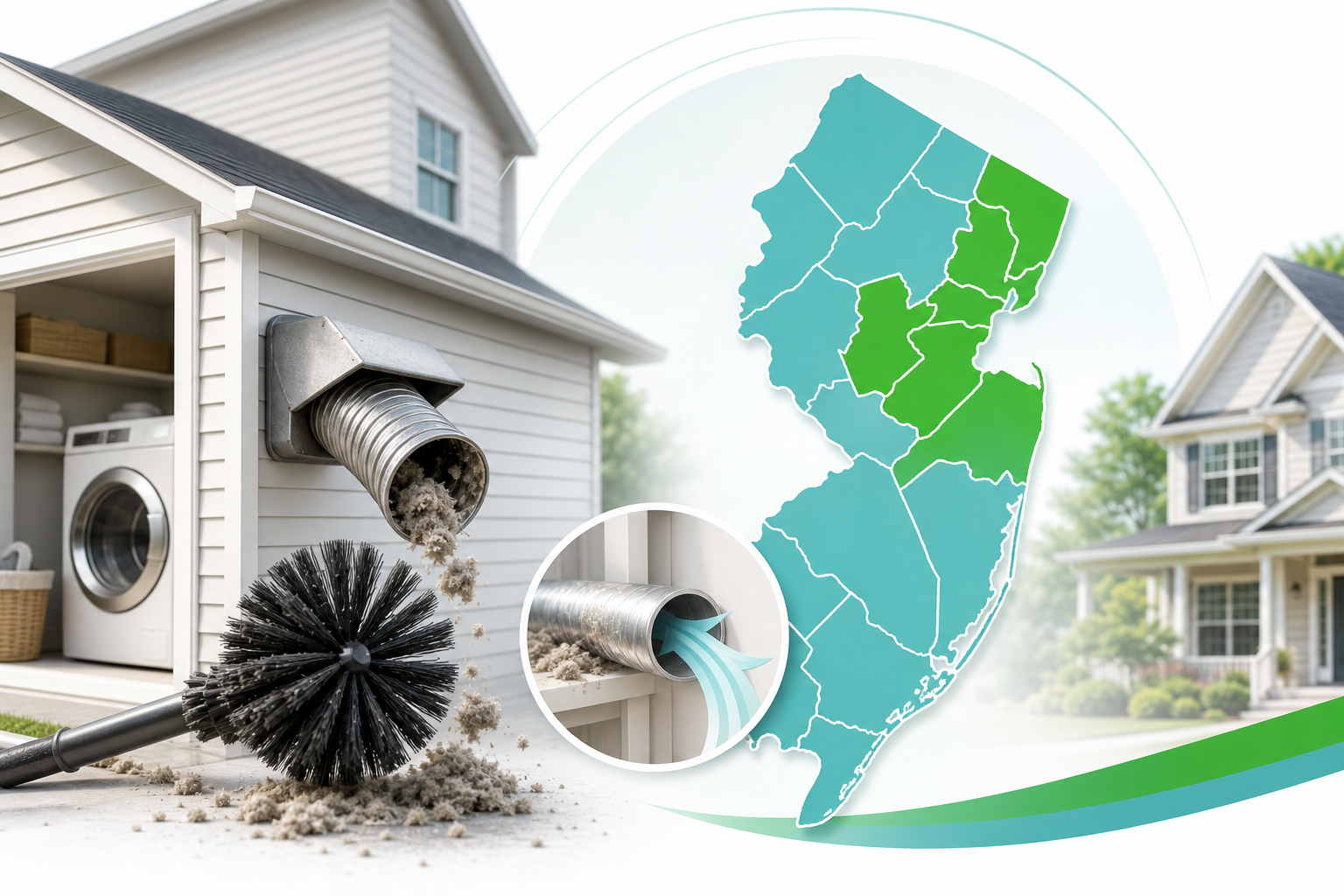
Pulling out the lint trap and wiping it down isn't the same thing. A professional cleaning uses rotary brushes and high-powered vacuum equipment to clear the full length of the duct — from the dryer connection all the way to the exterior vent cap.
The job typically takes 45 minutes to an hour. A thorough cleaning includes:
- Disconnecting the dryer from the duct
- Brushing and vacuuming the full duct run
- Inspecting the duct for damage, kinks, or improper materials
- Confirming the exterior vent flap opens and closes correctly
- Reconnecting the dryer and testing airflow after the cleaning
A good technician will also flag issues worth addressing — whether that's a flexible foil duct that doesn't meet current fire codes or a duct run that needs rerouting.
Dryer Vent Cleaning for NJ Homeowners
Certified Home Solution has been serving homeowners across eight New Jersey counties since 2017. Dryer vent cleaning is available as a standalone service or alongside other work like air duct cleaning, chimney sweeping, and carpet cleaning — all handled by trained technicians who come to your home.
Pricing typically runs between $100 and $300 depending on duct length and complexity. You can get a free quote by calling (732) 858-2441 or submitting a request through the online form at certifiedhomessolution.com.
FAQs
How often should a dryer vent be cleaned?
Most households should have their dryer vent professionally cleaned once a year. Households with heavy laundry use, pets, or long duct runs are better served by cleaning every five to six months.
What are the signs that a dryer vent is clogged?
The most common signs are clothes taking longer than 60 minutes to dry, clothes or the dryer running unusually hot after a cycle, a burning smell during operation, lint accumulating near the dryer or at the exterior vent, and the exterior vent flap not opening during a cycle.
Is a clogged dryer vent a fire hazard?
Yes. The NFPA and USFA identify failure to clean dryer vents as one of the leading causes of dryer fires. Lint is highly flammable, and restricted airflow raises temperatures inside the duct to the point where ignition becomes a real risk.
Can I clean my dryer vent myself?
You can clean the section of duct directly behind the dryer with a brush kit, but most homeowners can't reach the full duct run without professional equipment. DIY cleaning is better than nothing — but it doesn't replace a full professional cleaning, especially for longer or more complex duct routes.
How long does professional dryer vent cleaning take?
A standard cleaning runs between 45 minutes and one hour. Longer duct runs or heavily clogged vents may take a bit more time.
A Simple Rule
If you can't remember the last time your dryer vent was cleaned, schedule it now. One appointment a year is a small cost compared to the alternative. If you're in New Jersey and want a straightforward quote, Certified Home Solution can send a technician to assess and clean your vent. Call (732) 858-2441 or request a quote online.