- Why Chimney Brickwork Deteriorates Faster Than You Expect
- The Most Common Chimney Brick Repairs
- What Chimney Brick Repair Actually Costs in New Jersey
- Warning Signs That Mean You Should Call Now
- What Happens During a Chimney Repair Service Call
- Combining Chimney Repair with Cleaning
- How to Slow Down Future Brick Deterioration
- FAQs
- The Bottom Line
Your chimney looks solid from the outside. But the bricks chimney services professionals inspect every day often tell a different story once someone gets up close. Spalling faces, crumbling mortar joints, cracked crowns — these are common in New Jersey homes that are 10 to 30 years old, and they get worse with every freeze-thaw cycle the region delivers.
This article covers the most common types of chimney brick and masonry repair, what each one typically costs, and the warning signs that mean it's time to stop waiting and call a pro.
Why Chimney Brickwork Deteriorates Faster Than You Expect
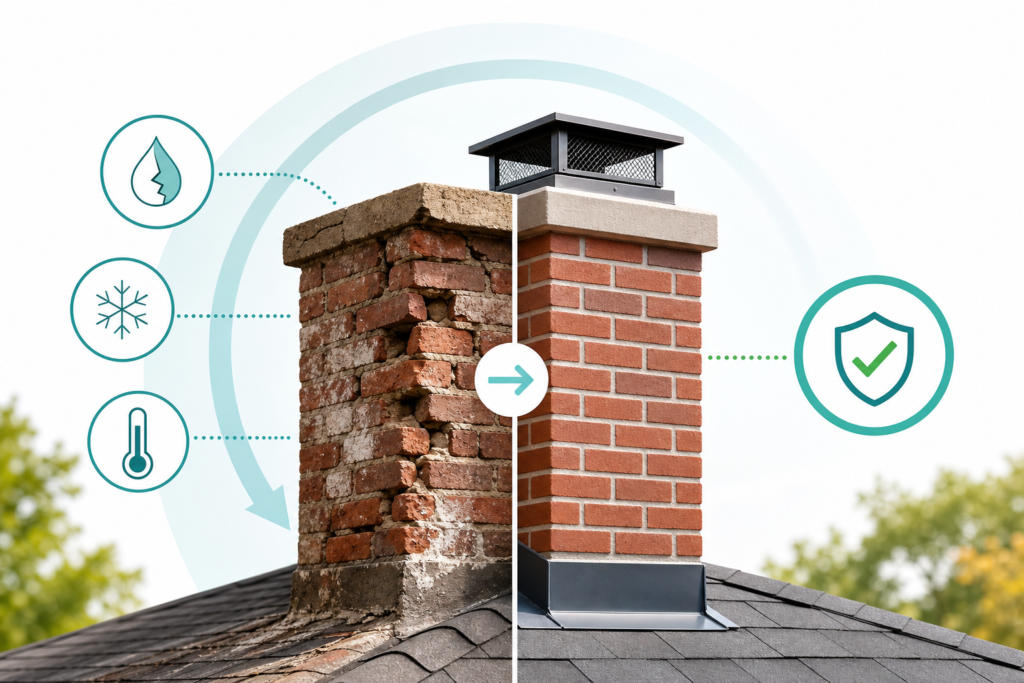
Chimneys take more abuse than almost any other part of a house. Fully exposed to rain, snow, ice, and sun, they also cycle between extreme heat when a fire is burning and near-freezing temperatures on a cold night. That combination of thermal stress and moisture is what drives most brick and mortar damage.
New Jersey's climate makes things worse. Many counties see more than 20 freeze-thaw cycles per winter. Water seeps into hairline cracks in mortar, freezes, expands, and widens the gap. Over several seasons, what started as a minor joint issue becomes a structural problem.
Age is the other factor. A chimney built in the 1990s or early 2000s is well past the point where original mortar joints should have been inspected. Most mortar has a practical lifespan of 20 to 30 years under normal conditions.
The Most Common Chimney Brick Repairs
Tuckpointing and Mortar Joint Repointing
Tuckpointing is the most frequently needed chimney masonry repair. It involves removing deteriorated mortar from the joints between bricks — typically to a depth of half an inch to three-quarters of an inch — then packing in fresh mortar that matches the original in composition and color.
Done correctly and early, tuckpointing is relatively affordable and stops moisture from penetrating the chimney structure. Ignored, the water damage spreads to the bricks themselves, which cost significantly more to replace than mortar.
Expect to pay anywhere from $500 to $2,500, depending on how many linear feet of joints need attention and how accessible the chimney is. A two-story roofline with a tall chimney stack adds labor time and sometimes requires scaffolding.
Spalling Brick Replacement
Spalling is what happens when the face of a brick flakes, chips, or pops off entirely — almost always caused by water absorbed into the brick and then frozen. Once a brick spalls, it absorbs even more water through the exposed porous surface, so the problem compounds quickly.
Replacing individual spalled bricks requires matching the original brick size and color, which can be difficult in older homes. A mason removes the damaged brick, cleans the cavity, sets a matching replacement, and repoints the surrounding joints.
Costs vary widely. Replacing a handful of bricks might run $300 to $600. Replacing a large section of the chimney face or rebuilding a portion of the stack can reach $1,500 to $4,000 or more, depending on the extent of damage and access requirements.
Crown Repair and Replacement
The chimney crown is the concrete or mortar cap that seals the top of the chimney structure around the flue liner. It slopes outward so water runs away from the flue opening rather than pooling on the masonry below.
Crowns crack for the same reason mortar joints do: thermal expansion and contraction. A small crack lets water run directly into the chimney structure with every rain, accelerating damage to the bricks, mortar, and liner below.
Minor cracks can sometimes be sealed with a flexible crown coat sealant. Larger cracks or a crown that has broken apart in sections typically require full replacement. Sealant application runs roughly $150 to $400; full crown replacement generally costs $300 to $1,500 depending on chimney size and complexity.
Chimney Cap Repair and Replacement
A chimney cap sits over the flue opening and keeps rain, animals, and debris out of the flue. Caps take direct weather exposure and can rust, crack, or shift out of position over time.
A missing or damaged cap is one of the fastest ways to accumulate water damage inside a chimney. It also creates an open entry point for birds, squirrels, and raccoons, which can block the flue with nesting material.
Cap replacement is one of the more straightforward repairs. Standard single-flue caps typically cost $150 to $400 installed. Custom or multi-flue caps can run higher.
Damper Repair and Replacement
The damper controls airflow inside the firebox or at the top of the flue. A stuck or warped damper can cause smoke to back up into the house, reduce heating efficiency, or let cold air pour down the chimney when the fireplace isn't in use.
Throat dampers, which sit just above the firebox, are the most common type in older NJ homes. Top-mount dampers, which seal at the crown level, are a popular replacement option because they also function as a rain and animal barrier.
Damper replacement typically runs $150 to $500 depending on the type and whether the installation requires removing existing hardware.
Firebox and Interior Brick Repair
The firebox is where the fire burns. Its bricks and mortar joints are exposed to direct flame and temperatures that can exceed 1,000 degrees Fahrenheit. Over time, the refractory mortar lining the firebox can crack, and the firebricks themselves can shift or break.
Damaged firebox bricks are a safety concern, not just a cosmetic one. Gaps in the firebox lining allow heat and combustion gases to reach the surrounding masonry, which can cause structural damage or, in serious cases, create a fire hazard inside the wall cavity.
Repointing a firebox with refractory mortar typically costs $200 to $600. Replacing a section of firebricks runs $400 to $1,200 or more depending on how much of the firebox is affected.
What Chimney Brick Repair Actually Costs in New Jersey
Labor rates in New Jersey run higher than national averages across most of the state's counties. Here's a summary of typical ranges for the most common repairs:
| Repair Type | Typical Cost Range |
|---|---|
| Tuckpointing / mortar repointing | $500 – $2,500 |
| Spalling brick replacement (partial) | $300 – $600 |
| Spalling brick replacement (large section) | $1,500 – $4,000+ |
| Crown repair (sealant) | $150 – $400 |
| Crown replacement | $300 – $1,500 |
| Chimney cap replacement | $150 – $400 |
| Damper replacement | $150 – $500 |
| Firebox repointing | $200 – $600 |
| Firebox brick replacement | $400 – $1,200+ |
These are market ranges, not fixed quotes. Your actual cost depends on the extent of damage, chimney height and access, and the specific materials required. A quote from a qualified technician before any work begins is the only way to know what your repair will actually cost.
Warning Signs That Mean You Should Call Now
Some chimney problems can wait. Others can't. These signs mean you should schedule an inspection without waiting until fall:
White staining on the exterior bricks. Called efflorescence, this means water is moving through the masonry and carrying dissolved salts to the surface. The staining itself is harmless — what it signals is not.
Bricks with chipped or missing faces. Spalling bricks absorb water at an accelerated rate. Each winter makes the damage worse.
Visible gaps in mortar joints. If you can see daylight through a joint or push a key into it, the mortar is gone and water has a direct path into the chimney structure.
Smoke backing up into the room. This can indicate a blocked flue, a failed damper, or a cracked liner — all of which require professional assessment.
Cracked or broken crown. Visible from the ground with binoculars, a cracked crown is one of the most common causes of accelerating chimney damage.
Rust stains inside the firebox. Rust inside the firebox usually means water is getting in through a failed cap, crown, or flashing.
A home inspector flag. If an inspection report notes any chimney concern, address it before the next heating season. Inspectors aren't chimney specialists — what gets flagged as a minor concern sometimes turns out to be more significant on closer examination.
What Happens During a Chimney Repair Service Call
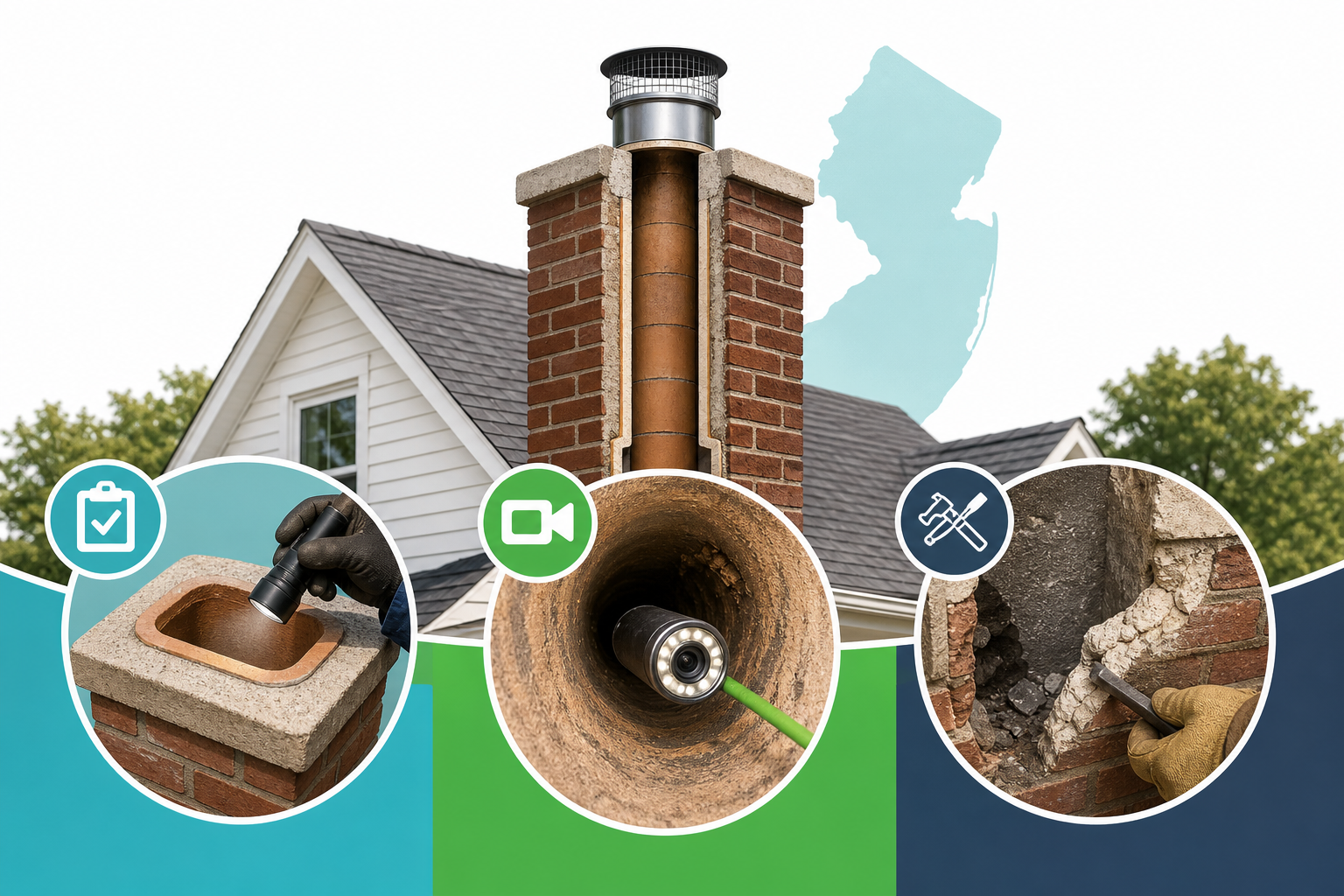
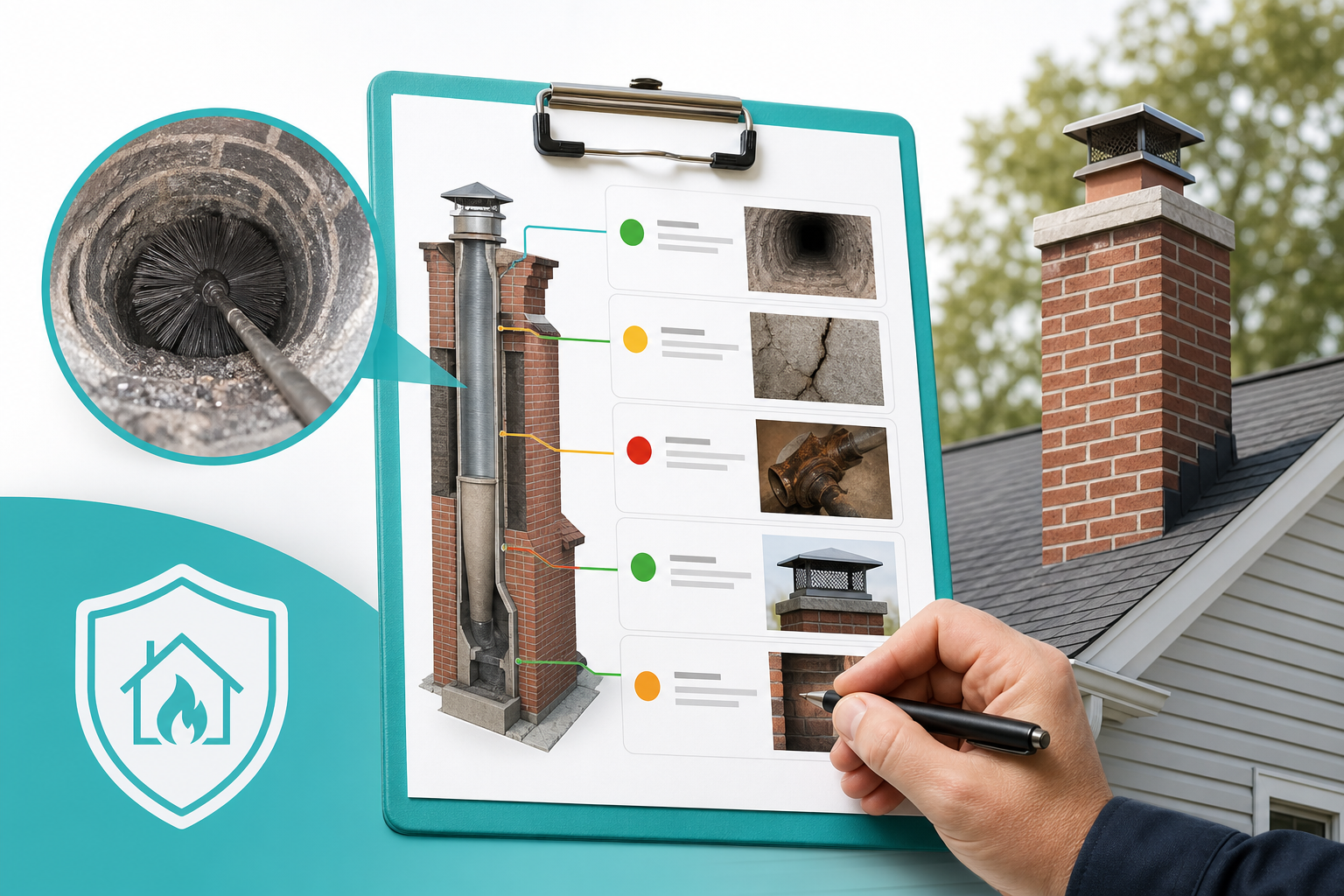
A chimney service call typically starts with a visual inspection of the exterior brickwork, crown, cap, and flashing, followed by an interior inspection of the firebox, damper, and flue. A technician should be able to identify the specific repairs needed and provide a written estimate before any work begins.
For brick and mortar repairs, the crew removes damaged material, prepares the surface, and applies new mortar or replaces bricks as needed. Larger repairs may require scaffolding or a lift for safe access to the upper sections of a tall chimney.
Most standard repairs can be completed in a single visit. More extensive work — partial chimney rebuilding, for example — may require two visits if materials need to be ordered or if the repair needs time to cure before the next phase.
Combining Chimney Repair with Cleaning
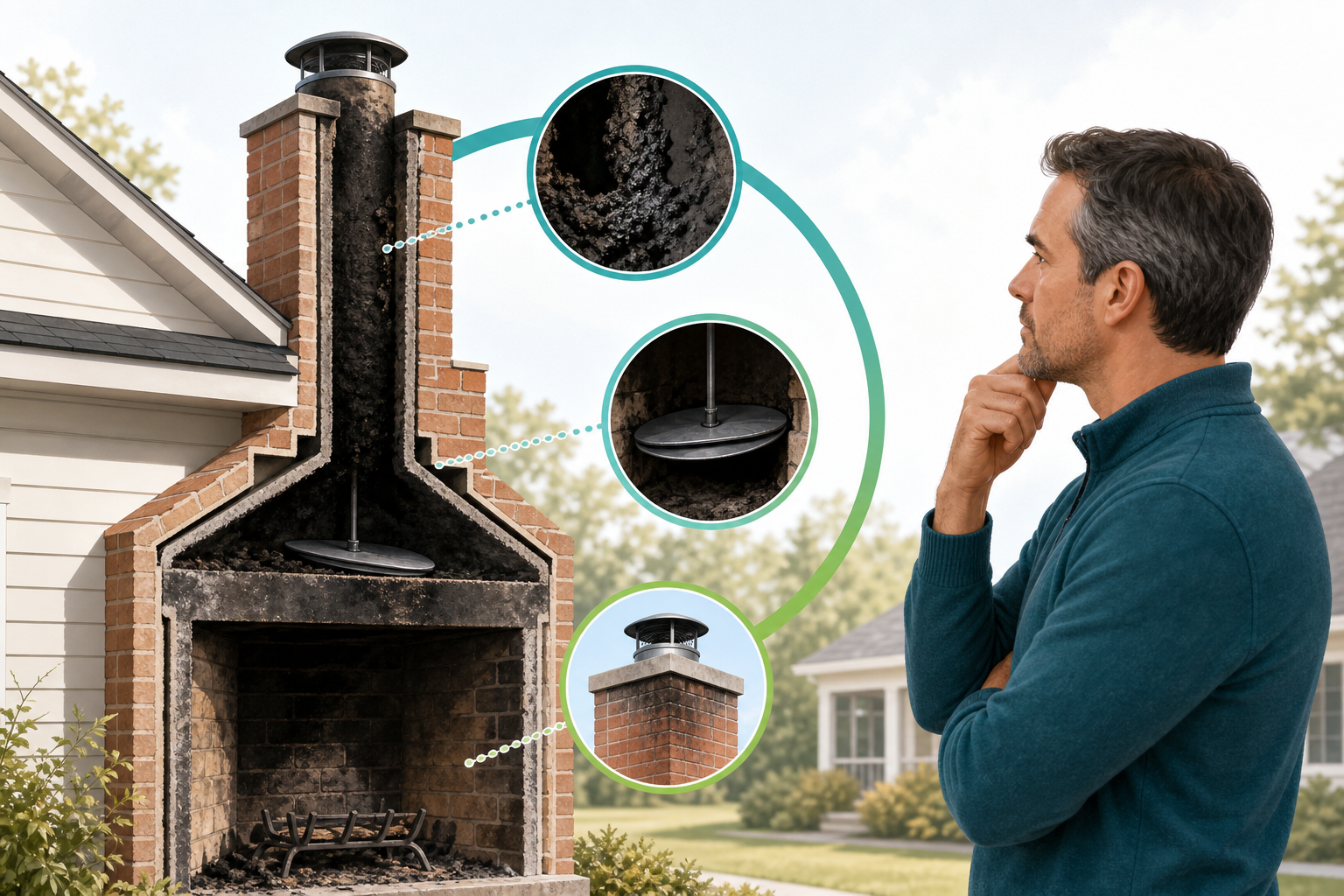
If your chimney needs brick or mortar repair, it almost certainly needs cleaning too. Creosote buildup in the flue is a fire hazard regardless of the condition of the exterior masonry, and a technician doing repair work will already have a clear view of the flue while on-site.
Chimney cleaning typically runs $150 to $300 and is worth scheduling at the same time as any repair work. It saves a second service call and gives the technician a complete picture of the chimney's condition before signing off.
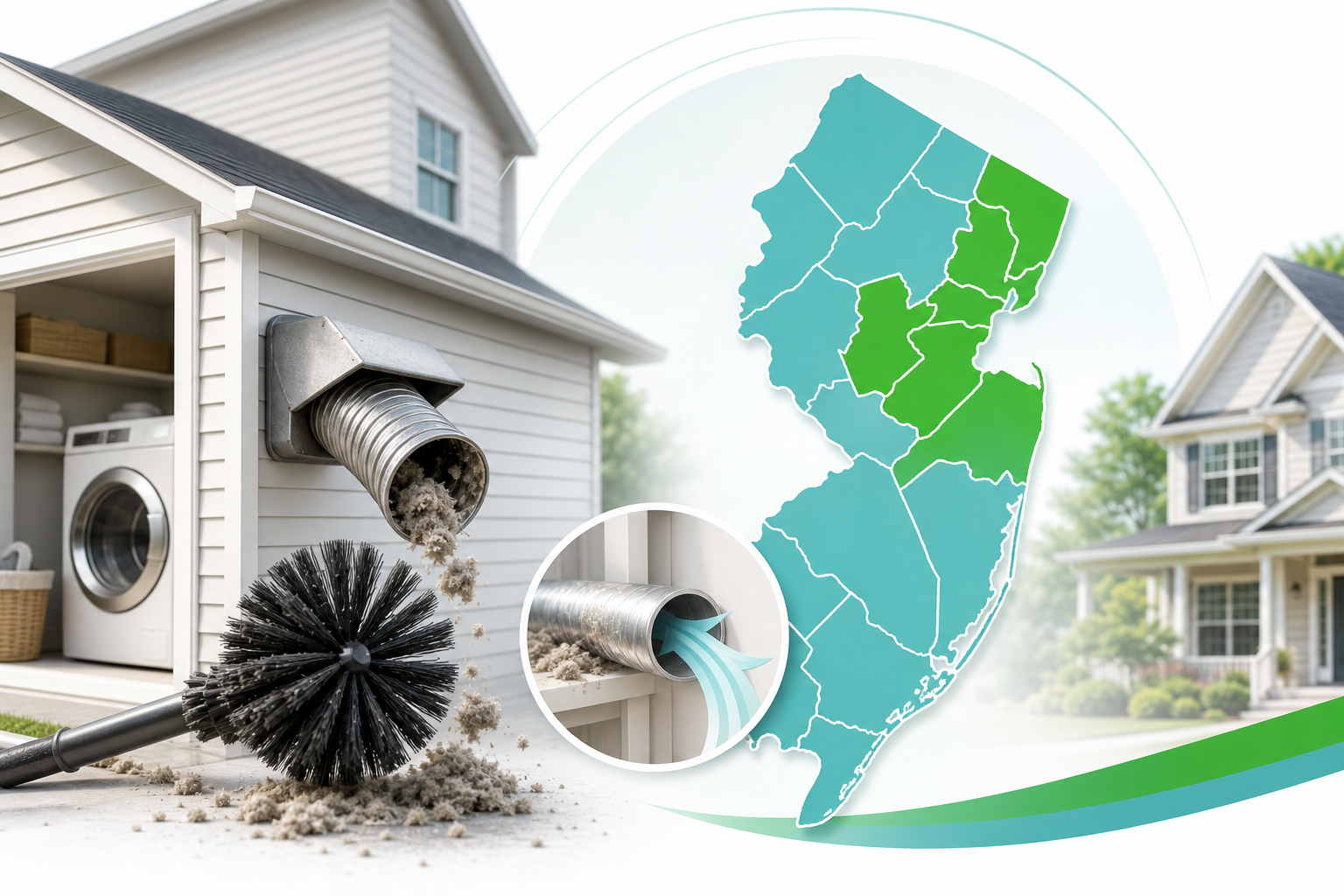
Certified Home Solution handles both chimney cleaning and chimney repair — including caps, bricks, crowns, and dampers — across Monmouth, Middlesex, Ocean, Bergen, Somerset, Union, Essex, and Morris counties. Call (732) 858-2441 or submit a quote request online.
How to Slow Down Future Brick Deterioration
Repairs fix what's already damaged. These steps reduce how quickly damage returns:
Install or replace the chimney cap. A properly fitted cap keeps water out of the flue and off the crown. It's the single most cost-effective protective measure for a chimney.
Seal the masonry. A vapor-permeable masonry water repellent applied to the exterior brickwork reduces water absorption without trapping moisture inside. This is different from paint or standard sealers, which can trap moisture and accelerate spalling.
Keep flashing in good condition. The metal flashing where the chimney meets the roof is a common water entry point. Inspect it annually and reseal any gaps with appropriate roofing caulk.
Schedule regular inspections. An annual inspection before the heating season catches small problems before they become expensive ones. For actively used fireplaces, most chimney professionals recommend inspection every year.
FAQs
What is included in bricks chimney services?
Bricks chimney services typically cover inspection and repair of the exterior masonry — mortar joint repointing, spalling brick replacement, crown repair or replacement, cap replacement, and damper work. The scope depends on what the inspection reveals. Some companies also include firebox repair and interior flue assessment.
How do I know if my chimney bricks need repair?
Common signs include white staining on the brick surface, visible gaps in mortar joints, chipped or flaking brick faces, rust stains inside the firebox, smoke backing up into the room, and a visibly cracked crown. A home inspector flag is also a reliable reason to get a professional assessment.
How much does chimney brick repair cost in New Jersey?
Costs vary by repair type. Tuckpointing typically runs $500 to $2,500. Replacing spalled bricks can range from $300 for a small section to $4,000 or more for extensive damage. Crown repair runs $150 to $1,500 depending on whether sealant or full replacement is needed. Cap and damper replacement generally fall in the $150 to $500 range.
Can I repair chimney mortar myself?
Small, accessible mortar joints on the lower sections of a chimney can be patched by a capable DIYer using premixed repointing mortar. That said, most chimney mortar damage is at height, requires matching the original mortar composition, and involves sections that are difficult to access safely without proper equipment. Professional tuckpointing also ensures the joint depth and packing are correct, which directly affects how long the repair lasts.
How long does chimney brick repair take?
Most standard repairs — tuckpointing a typical chimney, replacing a cap and crown — can be completed in a single visit of two to five hours. More extensive work like partial chimney rebuilding or large-scale brick replacement may require multiple visits, particularly if materials need to be sourced or mortar needs curing time between phases.
Should chimney cleaning and chimney repair be done at the same time?
Yes, when possible. A technician performing repair work already has access to the full chimney structure and can assess flue condition at the same time. Combining both into one visit saves a second service call and gives you a complete picture of the chimney's condition. Chimney cleaning typically runs $150 to $300 as a separate service.
How often should chimney brickwork be inspected?
Annual inspection is the standard recommendation for any chimney that sees regular use. For chimneys that aren't used often, every two to three years is a reasonable minimum. Given New Jersey's freeze-thaw cycles, annual inspection is particularly worthwhile — a single season of moisture and temperature swings can turn a small crack into a significant repair.
The Bottom Line
Chimney brick damage rarely announces itself loudly. It shows up as a white stain here, a crumbling joint there, a crack in the crown you might not notice until water has already been working through the masonry for a season or two. Caught early, the repairs are straightforward. The cost of waiting is not.
If your chimney is more than 15 years old — or if you've noticed any of the warning signs above — a professional inspection is the right next step. Certified Home Solution serves homeowners across eight New Jersey counties and handles chimney repair alongside cleaning, so you can get both done in a single visit. Call (732) 858-2441 or request a quote at certifiedhomessolution.com.