
- What Actually Causes a Chimney Fire
- Warning Signs You Shouldn't Ignore
- Chimney Fire Prevention: The Core Steps
- How New Jersey's Climate Affects Your Chimney
- What a Professional Chimney Cleaning Includes
- Booking Chimney Service in NJ
- Chimney Fire Prevention Checklist for NJ Homeowners
- Frequently Asked Questions
- Make Chimney Fire Prevention a Habit, Not a Reaction
Chimney fire prevention isn't a seasonal chore you can push off until something goes wrong. For New Jersey homeowners, where older single-family homes with wood-burning fireplaces are the norm, the chimney is one of the most overlooked fire hazards in the house. Knowing what causes chimney fires—and what actually stops them—is one of the most practical things you can do for your home and family.
This guide covers the real causes of chimney fires, the warning signs most homeowners miss, and the specific steps that keep your system safe year after year.
What Actually Causes a Chimney Fire
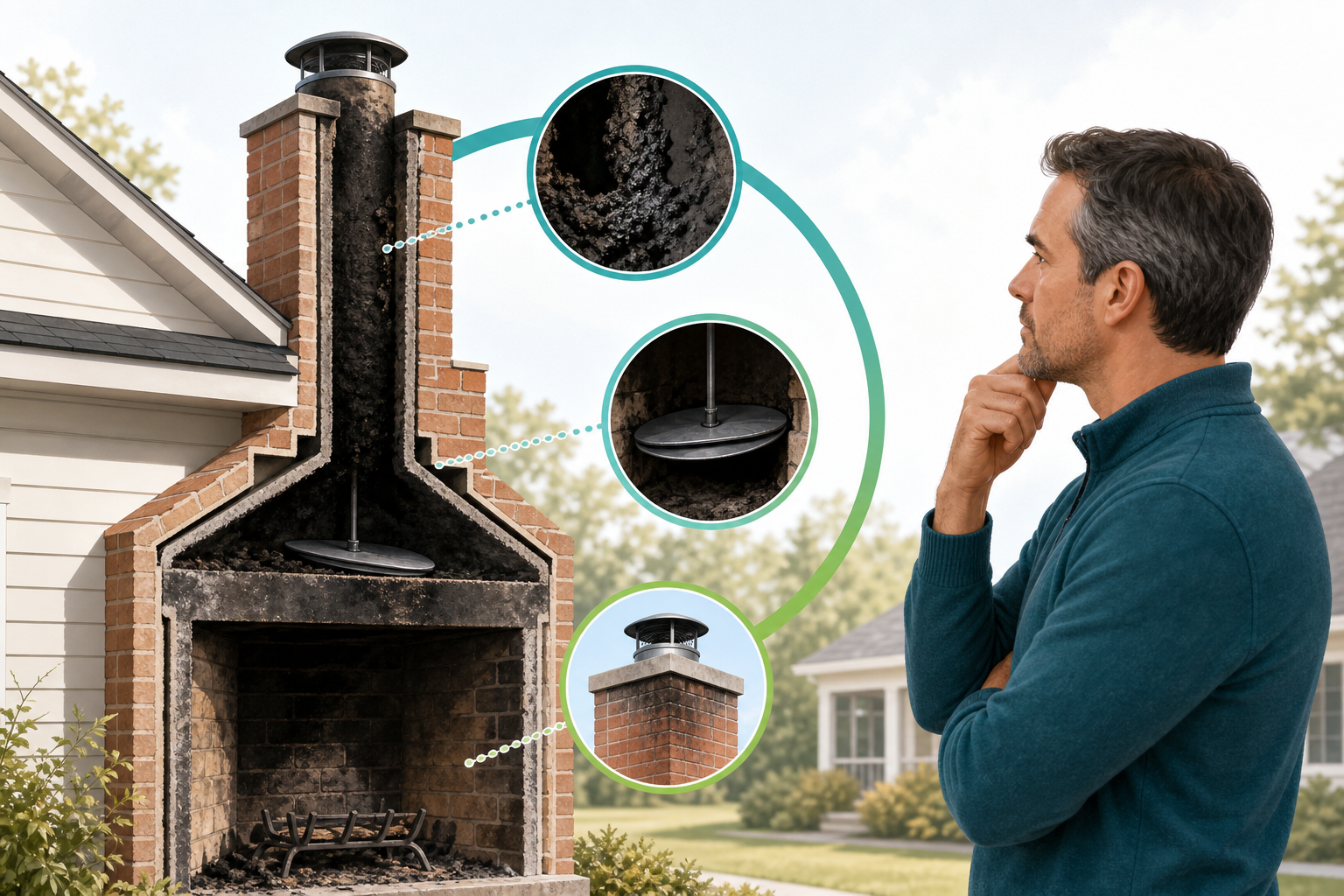
Most chimney fires start the same way: creosote buildup ignites inside the flue. Creosote is a dark, tar-like substance that forms when wood smoke cools before it fully exits the chimney. It clings to the interior walls of the flue liner and builds up over time.
Creosote develops in three stages. The first is a light, flaky deposit that brushes off easily. The second is a thicker, tar-like coating. The third is a hard, glazed layer that's extremely difficult to remove and burns at temperatures that can exceed 2,000 degrees Fahrenheit. What surprises most homeowners is how quickly a chimney can move from stage one to stage three—especially when they're burning unseasoned wood or running slow, smoldering fires.
A chimney fire doesn't always announce itself dramatically. Some burn slowly and quietly, doing real structural damage to the flue liner without any visible flames. Others are explosive, producing loud cracking sounds, a sharp smell, and visible smoke or sparks shooting from the top of the chimney.
Warning Signs You Shouldn’t Ignore
Catching a problem early can be the difference between a service call and a structural fire.
Visible creosote deposits. If you look up into the firebox and see thick, black, shiny buildup on the damper or lower flue walls, the creosote has already reached a level that needs professional attention.
A strong, acrid smell from the fireplace. This is especially noticeable in summer when the chimney is warm and humid. That smell is creosote off-gassing—it means buildup is present.
Smoke backing into the room. When a fire pushes smoke into the living space instead of drawing it up the flue, you're likely dealing with a blockage, a damaged damper, or a flue too dirty to draft properly.
Sounds during a fire. Popping, cracking, or a low roar coming from the chimney while a fire is burning can mean creosote is actively igniting inside the flue.
A home inspector flag. If an inspection report calls out the chimney as a concern, don't table it. Inspectors flag chimneys for a reason, and whatever's causing the issue won't fix itself.
Chimney Fire Prevention: The Core Steps
Schedule Annual Chimney Cleaning
The single most effective thing you can do is have your chimney professionally cleaned and inspected every year. For wood-burning fireplaces, that means before each heating season—typically late summer or early fall. A trained technician will remove creosote deposits, check the flue liner for cracks, inspect the damper, and identify any structural issues before you light your first fire of the season.
Chimney cleaning typically runs $150 to $300, depending on the condition of the flue and the type of fireplace. That's a minor cost compared to repairing fire damage or replacing a cracked flue liner.
Burn Seasoned, Dry Wood Only
Wet or green wood produces far more smoke and burns at lower temperatures, which accelerates creosote formation. Seasoned firewood has been dried for at least six months and has a moisture content below 20 percent. You can test it with an inexpensive moisture meter, or look for wood that's lighter in weight, has cracks at the ends, and makes a hollow sound when two pieces are knocked together.
Hardwoods like oak, maple, and ash burn hotter and cleaner than softwoods like pine. Avoid burning trash, treated lumber, cardboard, or anything with coatings or chemicals—these produce excessive smoke and introduce compounds that speed up buildup.
Build Hotter, Shorter Fires
Slow, smoldering fires are the primary driver of creosote accumulation. When combustion temperatures are low, smoke cools before it exits the flue and deposits more residue on the walls. A hotter fire burns more completely, produces less smoke, and leaves less behind.
Try the top-down method: place the largest logs at the bottom, smaller pieces on top, and kindling at the very top, then light from the top. This produces a cleaner, hotter burn from the start. Avoid overloading the firebox, which can choke the fire and drop combustion temperatures.
Warm the Flue Before Lighting
A cold flue creates a downdraft—air flows down into the firebox rather than up and out. Light a fire before the flue is warm and smoke will back up into the room while the fire struggles to draw. To fix this, hold a lit piece of newspaper near the open damper for 30 to 60 seconds before building your fire. You'll feel the draft reverse when the flue is ready.
Keep the Damper Fully Open
A partially closed damper restricts airflow, lowers combustion temperatures, and traps smoke in the flue. Always open the damper fully before lighting a fire and keep it open until the fire is completely out and the coals are cold. Closing a damper over live coals can push carbon monoxide into the living space.
Install and Maintain a Chimney Cap
A chimney cap sits at the top of the flue and does several things at once: it keeps rain, snow, and debris out of the flue; it prevents birds and animals from nesting inside; and it stops sparks from escaping and landing on the roof or nearby landscaping.
Caps corrode, shift, and take damage over time. If yours is missing or in poor condition, replacing it is a straightforward repair that pays for itself quickly in reduced maintenance costs.
Address Structural Repairs Promptly
A cracked flue liner is one of the most serious chimney safety issues a homeowner can face. The liner contains heat and combustion gases inside the flue and keeps them from reaching the surrounding framing. When it cracks, those gases can escape into the wall cavity—and the risk of a house fire increases significantly.
Chimney repair work—caps, bricks, crowns, dampers—should be handled by someone who knows what they're looking at. A minor crack doesn't stay minor. Temperature cycling through the heating season will widen it.
How New Jersey’s Climate Affects Your Chimney
New Jersey winters are cold enough that most homeowners with wood-burning fireplaces use them regularly from November through March. That's five months of active use, which means meaningful creosote accumulation by spring.
The freeze-thaw cycle also takes a toll on masonry. Water works its way into small cracks in the mortar or crown, freezes, expands, and widens those cracks over successive winters. If your chimney is 15 or 20 years old and hasn't had a recent inspection, there's a reasonable chance the mortar joints or crown have started to deteriorate.
Humidity is another factor. NJ summers are humid, and a chimney without a cap—or with damaged flashing—can allow moisture into the flue. Moisture accelerates creosote breakdown and can cause the liner to spall or crack over time.
What a Professional Chimney Cleaning Includes
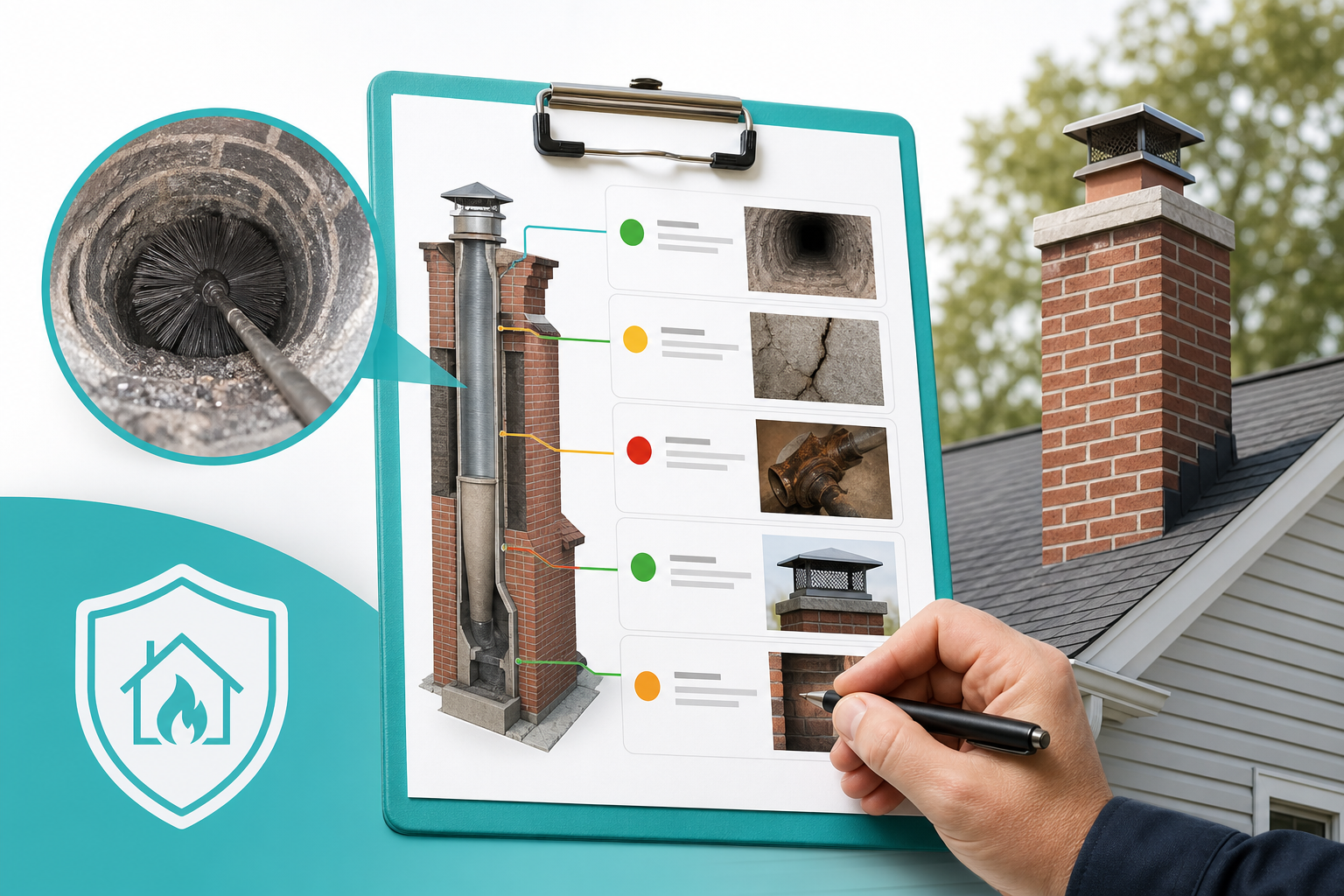
A proper chimney cleaning goes well beyond running a brush through the flue. A thorough service covers:
- Removing creosote deposits from the flue liner
- Inspecting the liner for cracks or gaps
- Checking the damper for proper operation
- Clearing debris and blockages from the flue
- Inspecting the firebox, smoke shelf, and smoke chamber
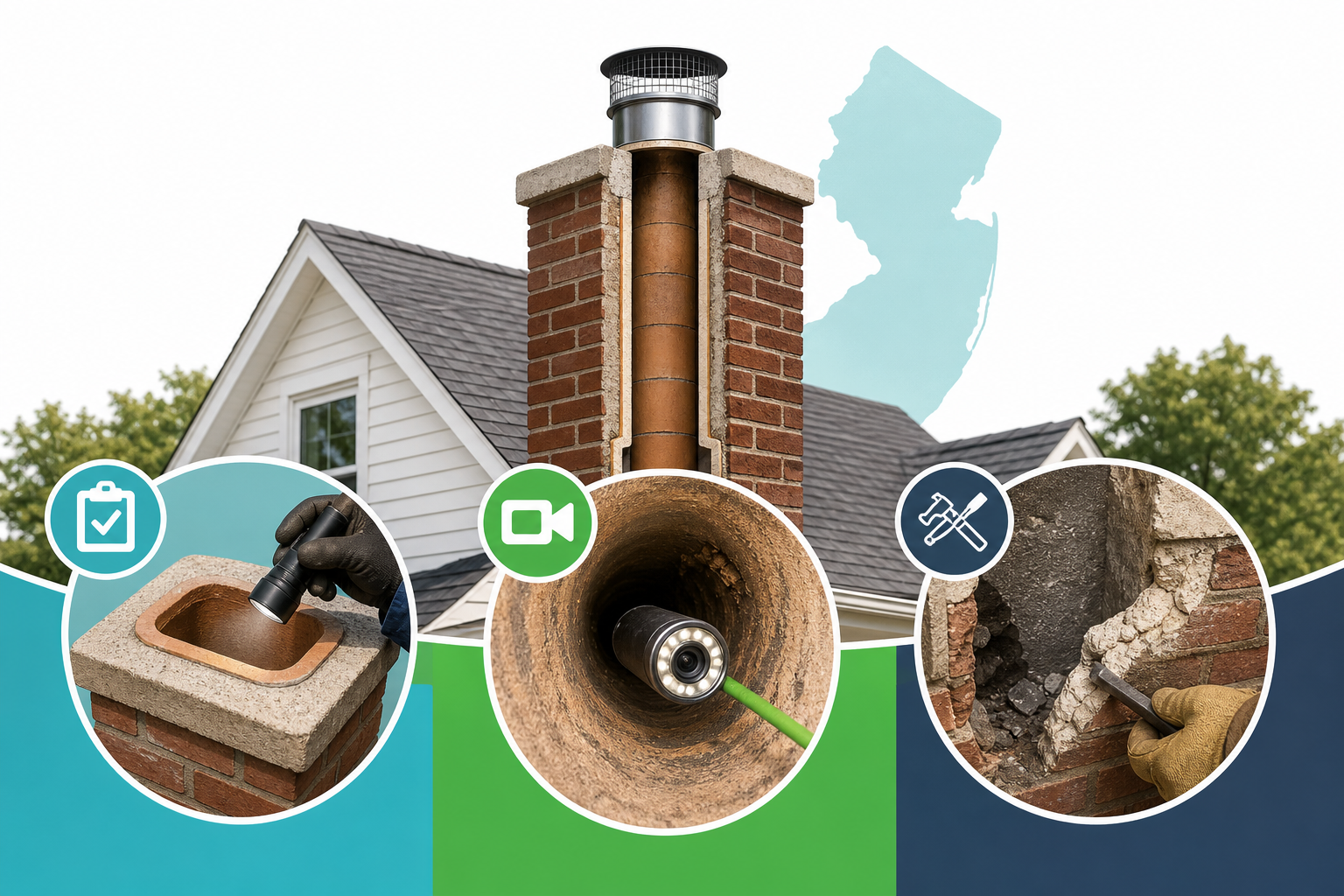
- Assessing the condition of the cap, crown, and exterior masonry
This is the kind of inspection that catches problems before they become expensive. A visual check from the firebox opening doesn't give you the same picture.
Booking Chimney Service in NJ
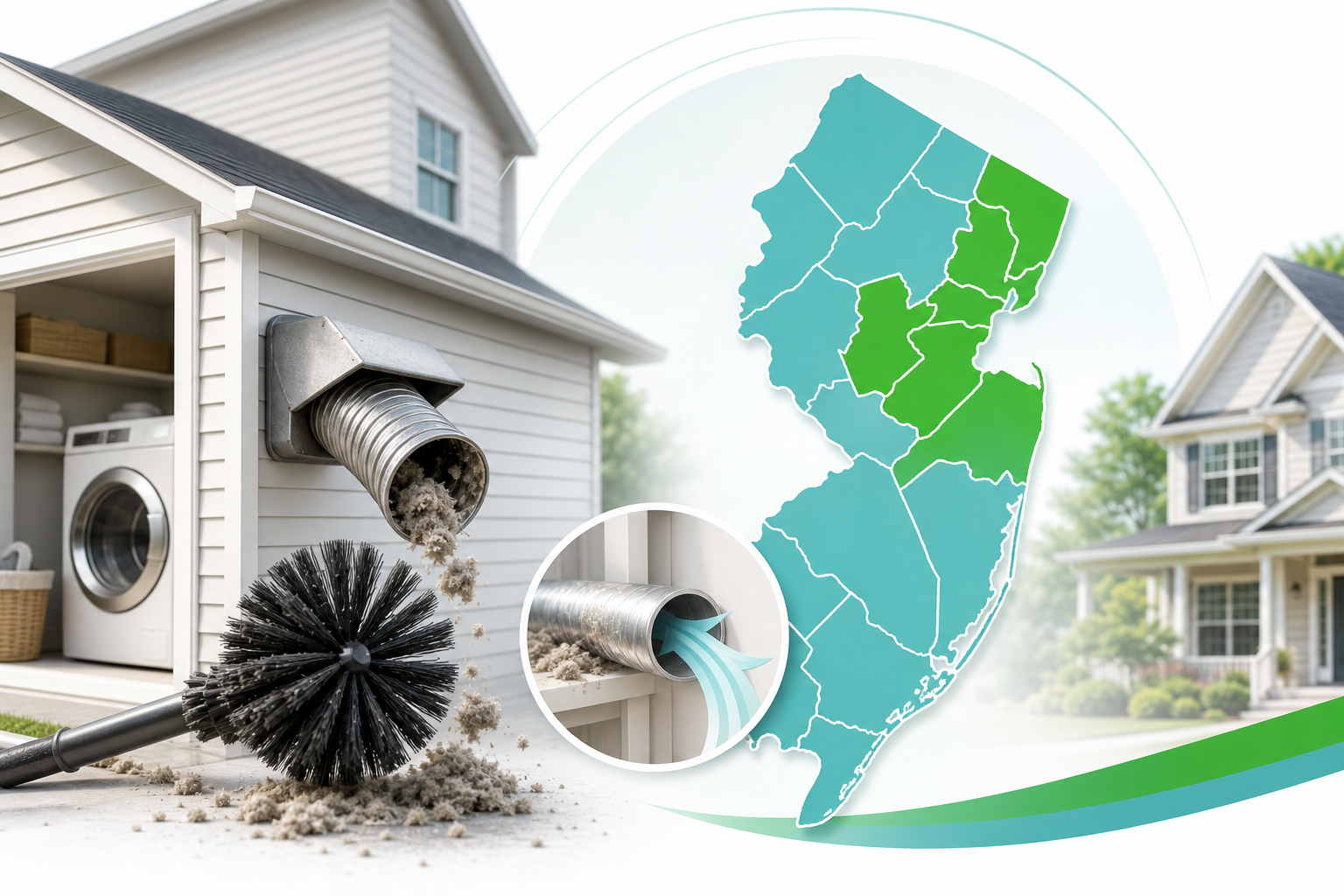
If you're in Monmouth, Middlesex, Ocean, Bergen, Somerset, Union, Essex, or Morris County, Certified Home Solution has been handling chimney cleaning and repair for NJ homeowners since 2017. The company covers all six home service categories, so if your chimney, dryer vent, and air ducts all need attention, you can book everything through one call instead of coordinating three separate contractors.
Chimney cleaning typically runs $150 to $300. Get a free quote by calling (732) 858-2441 or submitting a request through the online contact form.
Chimney Fire Prevention Checklist for NJ Homeowners
Run through this before the heating season starts each year:
- Schedule professional chimney cleaning and inspection
- Confirm the damper opens and closes fully
- Check the chimney cap for damage or missing pieces
- Inspect visible mortar joints for cracks or gaps
- Stock only seasoned hardwood (moisture content below 20%)
- Test smoke and carbon monoxide detectors
- Clear the area around the firebox of flammable materials
- Know the signs of an active chimney fire and have a plan
Frequently Asked Questions
How often should a chimney be cleaned in New Jersey?
For a wood-burning fireplace that sees regular use, once a year is the standard. The best time is late summer or early fall, before the heating season begins. If you use your fireplace heavily or burn wood that produces a lot of smoke, mid-season cleaning may also be warranted.
What does a chimney fire sound like?
It can range from a low rumble or roar to loud popping and cracking coming from the flue. Some chimney fires burn quietly with no obvious noise at all—which is exactly why regular inspections matter even when nothing seems off.
Can I use my fireplace if I haven't had it cleaned in a few years?
It depends on the condition of the flue. Significant creosote buildup or a cracked liner creates real fire risk. If there's been a long gap in service, have a professional inspect the system before lighting anything.
What is the most dangerous type of creosote?
Stage three creosote—the hard, glazed variety—is the most hazardous. It's difficult to remove and burns at extremely high temperatures. It typically forms when stage one or two deposits are repeatedly exposed to heat without being cleaned.
Does burning a hot fire clean the chimney?
No. Hotter fires produce less creosote than slow, smoldering ones, but they don't remove deposits that have already built up. Existing creosote on the flue walls requires mechanical cleaning to come out safely.
How do I know if my chimney cap needs to be replaced?
Look for rust, missing mesh sections, a shifted or tilted cap, or debris collecting at the top of the flue. If you can see daylight through gaps in the mesh or the cap is no longer seated properly, it's time to replace it.
What's the difference between chimney cleaning and chimney repair?
Cleaning removes creosote, soot, and debris from the flue. Repair addresses structural issues: cracked liners, damaged crowns, deteriorated mortar joints, broken caps, or faulty dampers. A thorough cleaning appointment typically includes an inspection that identifies whether repair work is also needed.
Make Chimney Fire Prevention a Habit, Not a Reaction
The homeowners who avoid chimney fires aren't the ones who got lucky. They're the ones who scheduled the annual cleaning, burned the right wood, and dealt with small problems before they turned into large ones. None of these steps are complicated, and most cost far less than the alternative.
If your chimney is overdue for service—or if you've noticed any of the warning signs described here—don't wait until the first cold night of the season to deal with it. A professional inspection is the fastest way to know exactly where you stand.